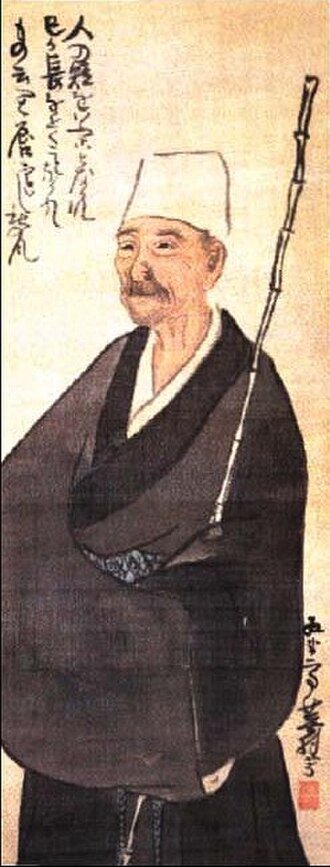
 AuthorMatsuo Bashō1644–1694
Nozarashi Kikō, variously translated as The Records of a Weather-Exposed Skeleton or Travelogue of Weather-Beaten Bones, is the first travel journal haibun by the Japanese poet Matsuo Bashō. It was written in the summer of 1684 and recounts the journey the author made that same year.
The personal context matters. In the summer of 1683 Bashō's mother died, and the following winter his friends and disciples built him a home in Fukagawa. A year later, in autumn 1684 (the first year of Jōkyō), Bashō left his home and set out on the journey.
The route passes Mount Fuji and the Fuji River, where the poet finds an abandoned infant and tosses it some food before moving on. Further stops include the Ise Grand Shrine and his hometown, where he meets relatives and mourns his mother. He then visits Yamato Province, Mount Futagami in the Ryōhaku Mountains, and the remains of Saigyō's hut.
The text begins as narrative prose, but as it progresses the prose gives way to a series of poems. According to translator Nobuyuki Yuasa, it is the first work by Bashō in which glimpses of his mature style appear.
Themes
Other works by Matsuo Bashō
Original Filopedia text based on Wikipedia (en) and Wikidata.