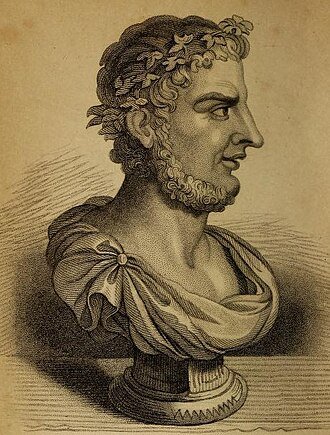
 AuthorJuvenal55–200
The Satires are a collection of sixteen poems in dactylic hexameter by the Roman poet Juvenal, written between the late first and the early second century AD. They are arranged in five books. Recent studies suggest that the first book was probably published around 100 or 101 AD, while the fifth seems to have been composed after 127, judging by a reference to the consul Lucius Aemilius Juncus in Satire 15. Between these two books the author wrote the remaining satires, grouped into three books. Juvenal addressed a highly educated audience, and his dense poems are full of historical and mythological allusions.
According to Quintilian, satire was a genre that Rome could claim as wholly its own, unlike the many forms it had borrowed from Greece. It allowed a broad discussion of social manners. Juvenal differs from Horace in tone: where Horace meant to make his readers laugh, Juvenal aimed to stir their indignation at the corruption of Rome.
The poems denounce the decline of Roman society: hypocrisy, the dangers of life in the city, flattery of the powerful, gastronomic extravagance, the dependence of clients on their patrons, the loss of virtue among women, the poor upbringing of children and greed for inheritances. Satire 4 is a mock-epic in which Domitian convenes a council to decide how to cook an enormous turbot; Satire 5 portrays the humiliation of a client invited to his patron's dinner; Satire 6, the longest and most famous, is a diatribe against women and marriage, and gave us phrases such as "rara avis" and "who will guard the guards themselves?". Satire 10 exposes the folly of human desires and contains "mens sana in corpore sano", while Satire 11 defends moderation at table against the luxury of gourmands.
The work exerted considerable influence on later literature, particularly on moral satire in subsequent centuries, where indignation at social vice became a model for many writers.
Themes
Original Filopedia text based on Wikipedia (es) and Wikipedia (en) and Wikidata.