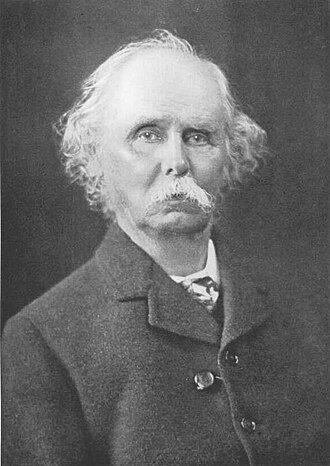
 AuthorAlfred Marshall1842–1924
Alfred Marshall's Principles of Economics, first published in 1890, became the standard textbook for generations of economics students and is regarded as his magnum opus. Marshall began writing it in 1881 and spent much of the following decade on the project. His plan originally extended to a two-volume survey of the whole of economic thought. The first volume appeared in 1890 and won worldwide acclaim, establishing him as one of the leading economists of his time. The second volume, which was to treat foreign trade, money, trade fluctuations, taxation and collectivism, was never published; his demand for completeness and his attention to detail kept him from mastering the work's full breadth.
The book is organised into six books and several appendices. It opens with a preliminary survey of the nature and method of economics, then defines fundamental notions such as wealth, production, consumption, income and capital, and examines human wants and utility. It goes on to study the agents of production, namely land, labour, capital and organisation, followed by supply and demand and finally the distribution of national income among wages, interest, profits and rent. Marshall stresses that economic phenomena must be understood over time, distinguishing short-period from long-period equilibrium.
His most lasting contribution lies in popularising supply and demand curves as tools for explaining how prices are determined. He also introduced the price elasticity of demand and the concepts of consumer and producer surplus. Together with the idea that consumers adjust their consumption until marginal utility equals price, these tools place him at the heart of the marginalist revolution.
Themes
Original Filopedia text based on Wikipedia (en) and Wikidata.