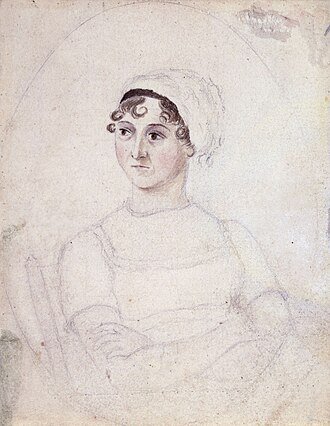
 AuthorJane Austen1775–1817
Pride and Prejudice is Jane Austen's best-known novel and one of the founding works of the romantic comedy in English fiction. Austen began drafting an early version, first titled First Impressions, when she was barely twenty, writing in simple notebooks in her family home. She revised the manuscript in 1809–1810 and again in 1812, and it was finally published anonymously on 28 January 1813. Its opening line, "It is a truth universally acknowledged, that a single man in possession of a good fortune, must be in want of a wife," is among the most quoted sentences in English literature.
The story unfolds over a little more than a year in a small rural community near London at the beginning of the nineteenth century. The Bennet family has five daughters of marriageable age, and their estate is entailed to the male line, so that on the father's death the mother and daughters would lose their home and much of their income to a cousin, the clergyman William Collins. For Mrs Bennet, finding wealthy husbands for her daughters is an urgent necessity. The arrival of Charles Bingley, a wealthy bachelor, and his friend Fitzwilliam Darcy, whose income far exceeds theirs, sets in motion a chain of encounters, misunderstandings and slights that leads Elizabeth Bennet to regard Darcy as arrogant and disdainful.
The heart of the novel is the personal growth of its two protagonists. Elizabeth, clever and sharp-tongued, is swayed by her prejudices, especially after hearing George Wickham's account of his history with Darcy. Darcy, for his part, must overcome a pride of class that keeps him from showing his feelings and that leads him to interfere in the courtship of Bingley and Jane Bennet. Letters, visits to Kent and Derbyshire, and the crisis caused by Lydia's elopement with Wickham force both to acknowledge their mistakes and to revise their view of each other.
The book is a subtle satire of social convention, of the economic position of women in Regency England, and of the vanity of the comfortable classes. Its wit, the sharpness of its dialogue and its use of free indirect discourse, which lets the reader enter Elizabeth's mind while keeping a critical distance, help explain its enduring success. Since publication it has enjoyed countless editions, stage adaptations, films and television series, and it remains a touchstone of English fiction.
Themes
Books to read
- Pride and Prejudice EnglishEPUB 595 KBRead online
- Pride and Prejudice, a play founded on Jane Austen's novel EnglishEPUB 132 KBRead online
Other works by Jane Austen
- Sense and Sensibility 1811
- Mansfield Park 1814
- Emma 1815
- Persuasion 1817
- Northanger Abbey 1818
Original Filopedia text based on Wikipedia (es) and Wikipedia (en) and Wikidata.