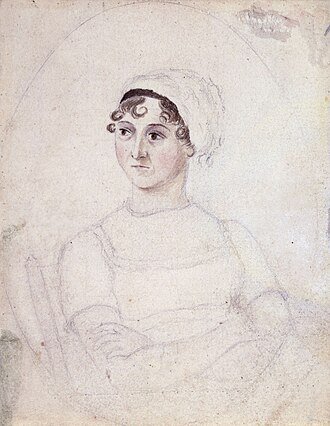
 AuthorJane Austen1775–1817
Emma, published in December 1815 with a title page dated 1816, was the last of Jane Austen's novels to appear during her lifetime. Written after her move to Chawton, it was issued by John Murray. Like her other fiction, it looks closely at the concerns and constraints of genteel women in Georgian and Regency England, where money, rank, and reputation shaped nearly every choice. Austen described it as a comedy of manners and, before beginning, remarked that she was going to take a heroine whom no one but herself would much like.
The action takes place in Highbury, an invented village in Surrey, and on the surrounding estates. Emma Woodhouse is handsome, clever, and rich, with a comfortable home and a cheerful temper. She has just seen her former governess, Miss Taylor, marry Mr Weston, and she takes credit for the match, convinced of her talent for matchmaking. She turns her attention to her new protégée, Harriet Smith, and tries to pair her with the local vicar, Mr Elton, persuading Harriet to refuse a sensible proposal from the farmer Robert Martin, whom she likes. Her friend Mr Knightley, who speaks his mind, warns her against this, but she does not listen. Mr Elton, an ambitious social climber, misreads her attentions and proposes to Emma herself. When she makes clear that she had thought him interested in Harriet, he is offended by the suggestion that Harriet is beneath him. He soon marries a wealthy and pretentious woman, as Knightley had predicted, leaving Harriet heartbroken and Emma ashamed of having misled her.
New arrivals add further complications. Frank Churchill, Mr Weston's son, is charming and liked by almost everyone. Jane Fairfax, a gifted and well-educated young woman with no fortune, is preparing to earn her living as a governess. Emma envies her and, without foundation, suspects her of an attachment to a married man. In fact Frank and Jane are secretly engaged, and the concealment brings tension, misunderstanding, and quarrels. On an outing to Box Hill, Emma thoughtlessly mocks the garrulous Miss Bates, and Knightley rebukes her sharply. The rebuke becomes a turning point: Emma recognises her fault, apologises, and begins to examine her own feelings. When the engagement of Frank and Jane is made public and Harriet confides her hopes regarding Knightley, jealousy shows Emma that it is he whom she truly loves.
The novel blends irony about vanity and the urge to control others with a fine observation of provincial society: the weight of reputation, class distinctions, visits, and drawing-room talk. Emma is spoiled, self-assured, and yet capable of correction, and her gradual maturing forms the core of the story. Knightley stands for good sense and moral judgement, while Emma's hypochondriac father supplies humour and tenderness. Critics have admired Austen's psychological precision in showing self-deception and the slow growth of her heroine.
The book was well received by readers and by much of the criticism of its day, and over time it has become one of Austen's most widely read novels. It has inspired many film, television, and stage adaptations and is regarded as a model of the comedy of manners in English fiction.
Themes
Books to read
- Emma EnglishEPUB 483 KBRead online
Other works by Jane Austen
- Sense and Sensibility 1811
- Pride and Prejudice 1813
- Mansfield Park 1814
- Persuasion 1817
- Northanger Abbey 1818
Original Filopedia text based on Wikipedia (es) and Wikipedia (en) and Wikidata.