Either/Or
philosophical treatise in the form of a collection of pseudonymous writings · 1843
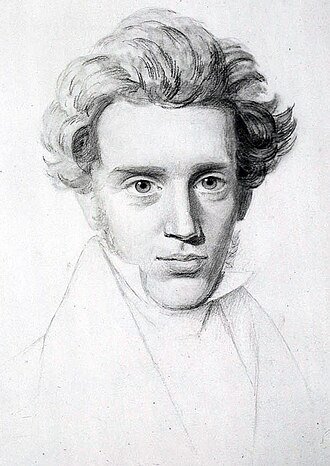 AuthorSøren Kierkegaard1813–1855
Either/Or is the first work Søren Kierkegaard published. It appeared in two volumes in 1843 under the pseudonymous editorship of Victor Eremita, a name meaning "victorious hermit," who claims to have found the papers in an old writing desk. Kierkegaard wrote much of it after a stay in Berlin in 1841 and 1842, where he attended lectures by Schelling, which disappointed him deeply, and worked on the manuscript while perfecting his German and attending operas and plays. A journal entry from 1846 says the book was written in about eleven months, though some pages were drafted earlier.
The work is organised around two ways of living. The first volume gathers writings by "A", an aesthete who explores music, seduction, drama and beauty through aphorisms, poetic essays and allegory. Among its best-known pieces are his reflections on Mozart, in which he argues that music expresses sensuality more forcefully than language, and the so-called Diary of a Seducer. Toward the end of this volume the aesthete falls into despair, a state of mind that foreshadows the existential anxiety Kierkegaard would develop in later books.
The second volume consists of two long letters from "Judge William," a defender of the ethical life. These letters, more argumentative and measured in tone, address moral responsibility, self-examination and marriage as a commitment that gives shape to a person's identity. For the ethical individual, the goal is not immediate pleasure but choosing one's life and sustaining that choice over time.
The book's concern is Aristotle's fundamental question of how we should live. Kierkegaard offers no closed thesis; he presents two perspectives embodied in distinct personae. The title plays on the logic of excluded middle and stands against Hegel's dialectical synthesis, which Kierkegaard believed dissolved personal freedom and choice into an impersonal historical process. The work ends with a brief sermon pointing toward the religious sphere, which occupied much of his later career. It was received early and has had lasting influence on existentialism, psychology and twentieth-century theology.
Themes
Other works by Søren Kierkegaard
Original Filopedia text based on Wikipedia (es) and Wikipedia (en) and Wikidata.