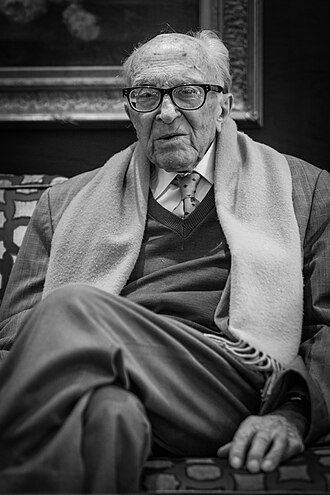
 AuthorBoris Pahor1913–2022
Necropolis (Slovene: Nekropola) is an autobiographical novel by Boris Pahor, a Slovene writer born in Trieste. First published in 1967 in Slovene, it draws on the author's experience in Nazi concentration camps during the Second World War. The narrative begins with a visit by the narrator to the memorial garden beside the former Natzweiler-Struthof camp in Alsace. From there, memory traces the stages of his captivity: Dachau, Dora, Harzungen, and finally Bergen-Belsen, where he was liberated in April 1945.
The book is not a linear chronicle. The first-person narrator reflects on the meaning of so much suffering, describing the physical decay of the prisoners, the attitudes of a fanaticized environment toward them, and the different ways victims faced the threat of death, along with how far they were willing to degrade themselves in order to survive. Despite inhuman conditions, the instinct for survival is constantly present among the inmates. Some of his descriptions go beyond his own experience, since he learns certain things only when he later returns to the sites.
The novel's reception was slow. Before its French translation in 1990 it attracted little attention beyond Slovene circles; translations into many European languages followed. In 2008 it was named Italian book of the year and received the Napoli prize for the best foreign-language book.
Themes
Original Filopedia text based on Wikipedia (es) and Wikipedia (en) and Wikidata.