Nationalism and Culture
theoretical and critical essay in political philosophy and sociology · 1937
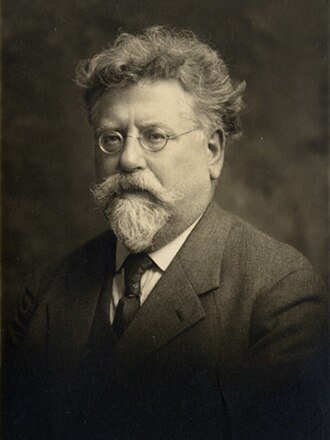 AuthorRudolf Rocker1873–1958
Nationalism and Culture is the most important theoretical work of the German anarchist writer Rudolf Rocker (1873-1958). Although its author is best known for his activism in anarcho-syndicalism, the book can be placed within the sociological tradition and the history of political and social ideas. It is essentially a critical work that examines religion, the state, nationalism and centralism from a libertarian perspective. Its central thesis holds that culture and nationalism are opposing forces: the more culture develops in a community, the more nationalism tends to diminish, and when nationalism grows, cultural life tends to weaken.
According to Rocker himself, the ideas in the book dated back to the period before the First World War, when he was a leader of the Jewish anarchist labour movement in London. He began writing around 1925, while living in Germany, and the project grew over the years from essays, articles and lectures. Originally written in German, it was meant to appear in the autumn of 1933, but the rise of the Nazi regime prevented its publication. It first appeared in English in New York in 1936, and later in Spanish, in Buenos Aires in 1942, translated by Diego Abad de Santillán. The work is organised in two books: the first addresses the inadequacy of materialist interpretations of history, the relationship between religion and politics, the conflicts between Church and State, the emergence of the nation-state, social contract doctrines, liberalism, democracy and socialism; the second studies the nation as a community of habits, language or race, the link between political unity and cultural evolution, and the role of the state in architecture, art and science.
Its reception was considerable within the libertarian movement, where Rocker was compared to Proudhon, Bakunin and Kropotkin. Thinkers from different traditions, such as Bertrand Russell, Albert Einstein and Thomas Mann, recognised its importance even when they disagreed with many of its positions. Some academic reviews, such as that of Hans Rothfels, pointed to inaccuracies and loosely defined concepts, but praised the breadth of its information. Over time it became one of the few anarchist works used in university courses.
Themes
Other works by Rudolf Rocker
Original Filopedia text based on Wikipedia (es) and Wikipedia (en) and Wikidata.