Records of the Grand Historian
general history of China (historiographical work) · 90 BC
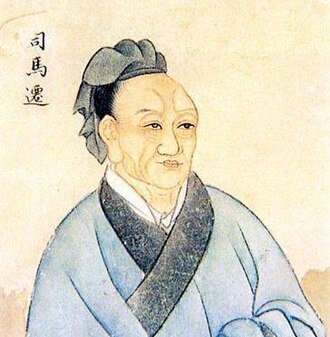 AuthorSima Qian144 BC–85 BC
The Shiji (Records of the Grand Historian) is the masterwork of Sima Qian, a historian of the Han dynasty. Work on it began around 109 BC, building on the notes and plans of his father, Sima Tan, who served as Grand Historian at the court, and Sima Qian is believed to have finished it around 91 BC, although the exact date of completion is not known. It is the first systematic general history of China and the first of the Twenty-Four Histories of imperial China, a model that all later dynastic histories followed.
The work covers some 2,500 years, from the age of the legendary Yellow Emperor down to the reign of Emperor Wu of Han, who was the author's own ruler. Sima Qian did not present history as one continuous narrative. He divided it into self-contained units that overlap and sometimes repeat one another, organized into five sections: the Basic Annals of rulers, the Tables of chronologies and genealogies, the Treatises on institutions and sciences, the Hereditary Houses of the feudal states, and the Biographies. The Biographies make up the largest part of the text and portray about 130 notable figures through anecdotes meant to reveal their character. They supplied the Chinese language with a large number of set phrases that are still in use today.
To document his account, Sima Qian consulted the imperial archives, gathered oral traditions, and travelled through several regions, checking rumours and legends against one another. His method has been compared to that of a modern journalist: collecting sources, verifying them, and analysing them. He also sought patterns in the development of history, and concluded that the will of individuals plays a decisive role in its course.
The author was punished with castration by Emperor Wu after defending a general who had fallen out of favour. He chose to endure this humiliation rather than take his own life, so that he could finish his work, which shows how much he valued the enterprise.
His lively style, with dialogues attributed to historical figures, distinguishes it from the later official chronicles, which were more closely bound to Confucian doctrine and to the glorification of imperial power. Some sections, however, are dry and today are read mainly by specialists. The Shiji was decisive in shaping how the Chinese understood their own past, and its influence reached the literature and historiography of Japan and Korea as well.
Themes
Original Filopedia text based on Wikipedia (es) and Wikipedia (en) and Wikidata.