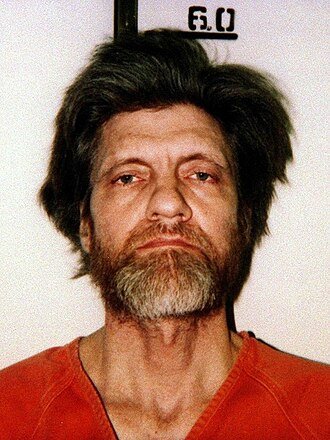
 AuthorTed Kaczynski1942–2023
Industrial Society and Its Future is a manifesto published in 1995 under the collective signature «Freedom Club», attributed to Theodore Kaczynski, an American mathematician known as the Unabomber. The text emerged from a mail bomb campaign that Kaczynski carried out between 1978 and 1995 against people linked to modern technology, with the stated aim of protecting the wilderness by hastening the collapse of industrial society. In April 1995 the authors offered to end their bombings if the text were published, and in September it appeared as a special supplement in The Washington Post, after an arrangement to split the costs with The New York Times. The decision, authorized by Attorney General Janet Reno to help identify the author, made the manifesto more notorious than the bombings themselves.
The essay, roughly 35,000 words long and with numbered paragraphs, argues that the Industrial Revolution began a harmful process of natural destruction and of subordinating human beings to a sociopolitical order that requires people to adapt to machines rather than the reverse. According to the author, technological advances are widely accepted as purely positive without considering their overall effect, which erodes individual freedom and autonomy, destroys human-scale communities and produces widespread psychological and physical suffering. Kaczynski describes modern technological society as a nearly totalitarian force that adjusts individuals to the needs of the system, and he believes this tendency will not be corrected through reform. He therefore proposes a revolution aimed not necessarily at overthrowing governments but at dismantling the economic and technological foundations of modern society.
Its reception was divided. Many commentators read it in 1995 as an intellectually serious text, and some recognized concerns already present in critiques of technology. Others rejected it because of the violence that accompanied it. Over time it has continued to be cited in debates about technology, the environment and autonomy, and its author later expanded his ideas in the book «Technological Slavery» (2019). Studies published afterward suggest that its intellectual sources were more a synthesis than a direct reading of the critics it was first associated with, drawing on thinkers such as Jacques Ellul, Desmond Morris and Martin Seligman.
Themes
Other works by Ted Kaczynski
Original Filopedia text based on Wikipedia (es) and Wikipedia (en) and Wikidata.