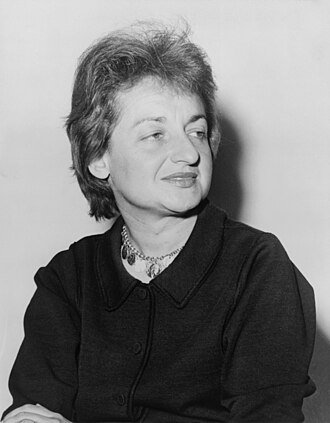
 AuthorBetty Friedan1921–2006
The Feminine Mystique is a book published in 1963 by the American writer and activist Betty Friedan. It grew out of a survey Friedan conducted in 1957 among her former classmates at Smith College, on the occasion of their fifteenth reunion. The answers revealed a widespread unhappiness among women who, according to the dominant model of the time, seemed to have everything: a husband, a home, children and material comfort. That finding led Friedan to interview other suburban housewives and to study psychology, advertising and the women's press. Conceived as an article, the piece was rejected by magazines and ended up as a book, published in February 1963, which became a bestseller, selling more than a million copies in its early years.
Friedan coined the phrase that gives the book its title to describe the set of assumptions holding that a woman's fulfillment lay exclusively in marriage, motherhood and housework. In postwar America, she argued, this idea was spread through women's magazines largely edited by men, an educational system that restricted girls' studies, psychoanalytic and functionalist theories that presented femininity as a biological destiny, and advertising that turned the housewife into a professional consumer. The outcome was what she called "the problem that has no name": a dissatisfaction that women experienced as a personal failing and seldom shared.
The book builds its case by criticizing these institutions and documenting their effects: loss of identity, dependence, and the search for compensation in sex, shopping or the lives of children. Friedan proposes that women should mature into a full human identity, not one reduced to reproduction, and she defends work and education as paths to autonomy.
The work is regarded as one of the founding texts of the second wave of feminism and is credited with a decisive role in the founding of the National Organization for Women in 1966. It has also drawn criticism for concentrating mainly on the experience of middle-class white women, leaving aside the lives of Black, Latina and working-class women.
Themes
Other works by Betty Friedan
- The Second Stage 1981
Original Filopedia text based on Wikipedia (es) and Wikipedia (en) and Wikidata.