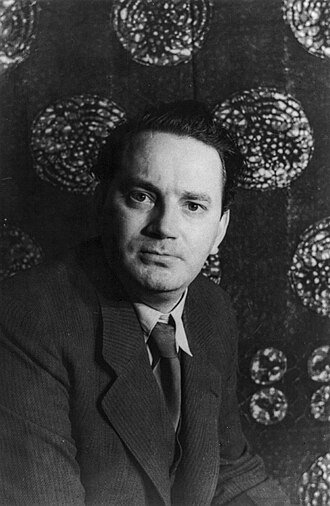
 AuthorThomas Wolfe1900–1938
Look Homeward, Angel: A Story of the Buried Life is Thomas Wolfe's first novel, published in 1929. It is generally regarded as a highly autobiographical coming-of-age story, and its protagonist, Eugene Gant, is widely read as a version of Wolfe himself. Although it briefly recounts the early life of Eugene's father, most of the book covers the years from Eugene's birth in 1900 to his definitive departure from home at nineteen. The setting is a fictionalized version of Asheville, North Carolina, Wolfe's home town, which appears in the novel under the name Altamont.
The title comes from John Milton's poem "Lycidas", and the novel grew partly out of a concrete object: a stone angel that Wolfe's father had ordered from New York, which stood for years in the family's monument shop before being sold and moved to a cemetery in nearby Hendersonville. The boarding house run by Eugene's mother, modeled on one run by Wolfe's own mother, has been called "the most famous boardinghouse in American fiction."
The book is divided into three parts. In the first, the marriage of Eugene's father, Oliver Gant, marked by tragedy and alcoholism, gives way to Eugene's childhood as a bright boy close to his father, despite growing tension with his mother. The second part follows his education, his enrollment in a preparatory school run by the Leonards, and the contrast between his scheming, business-minded brothers and the melancholy, tender Ben. The third follows Eugene to university, where he falls in love with a boarder, suffers emotional crises, and undergoes the experiences that drive him to leave his hometown.
The novel was published after an editing process with Maxwell Perkins of Scribner, who helped cut around sixty thousand words from the vast manuscript. Wolfe later felt uneasy about how much the editing had shaped the book, which strained his relationship with Perkins, though the two reconciled before Wolfe's death in 1938. A restored version of the original manuscript, titled O Lost, appeared in 2000.
Initial reception was largely positive, with praise for its brilliance and emotional force, although later critics, led by Harold Bloom, often judged it undisciplined and excessive. Still, it remains widely read. Playwright Ketti Frings adapted it for the stage, and her Broadway version won the Pulitzer Prize for Drama in 1958; a television film and a musical followed.
Themes
Original Filopedia text based on Wikipedia (es) and Wikipedia (en) and Wikidata.