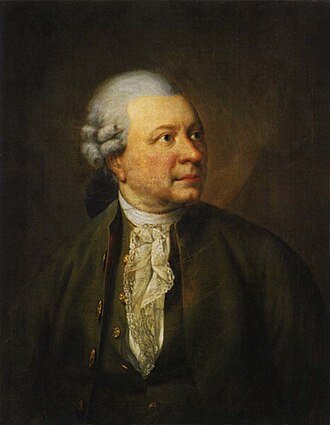
 AuthorFriedrich Gottlieb Klopstock1724–1803
Der Messias (The Messiah) is an epic poem by the German poet Friedrich Gottlieb Klopstock, published in instalments between 1748 and 1773. It runs to 19,458 dactylic hexameters, somewhat longer than Homer's Iliad, which has about 15,693 lines. The plan took shape while Klopstock was a pupil at the classical school at Schulpforta (1739–1745), and it owed much to his reading of Milton's Paradise Lost in Johann Jakob Bodmer's translation. Before writing the verse, Klopstock drafted the first three cantos in prose. After moving to Leipzig in 1747 he recast them in hexameters, and in 1748 they appeared anonymously in the Bremer Beiträge. Further cantos followed in 1750, 1755, 1768 and 1773.
The subject is the redemption of mankind, beginning with Jesus's entry into Jerusalem on Palm Sunday. Where Milton relies on sharp contrasts, moving from darkness to light and misery to bliss, Klopstock aims at a sustained, dazzling mental state, with more contemplation than clash. The most celebrated passages include the scenes of hell, the council of the devils, their punishment through transformation, the journeys of angels and devils through the universe, and the vision of the Last Judgment.
The public needed about a year to adjust to the poem's new form and content, but its success then was remarkable, especially among religious readers and women. Klopstock's use of hexameters instead of the traditional Alexandrine drew fierce criticism from Gottsched's school, while Bodmer's followers applauded. Its fame faded after the final cantos, yet it inspired a flood of biblical epics and shaped a whole generation of German poets.
Themes
Original Filopedia text based on Wikipedia (en) and Wikidata.