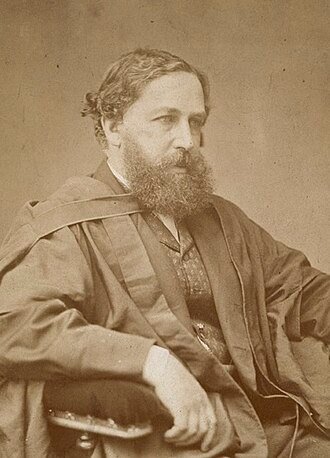
 AuthorWilliam Stanley Jevons1835–1882
The Coal Question, published in 1865 by the economist William Stanley Jevons, is a book that examines the implications of Britain's reliance on coal. Its full title, An Inquiry Concerning the Progress of the Nation, and the Probable Exhaustion of Our Coal Mines, states the aim: starting from the fact that coal is a finite, non-renewable resource, Jevons raised the question of sustainability. He asked, rhetorically, whether it was wise to allow the country's commerce to grow beyond the point at which it could long be maintained.
His central thesis was that the supremacy of the United Kingdom in world affairs was transitory, precisely because of the finite nature of its primary energy source. To defend it, Jevons addressed questions that today we associate with sustainability: limits to growth, overpopulation, overshoot, the energy returned on energy invested, the taxation of energy resources and renewable alternatives. He described coal as the material energy of the country, the factor that makes nearly any achievement possible, and argued that its consumption had been growing exponentially, at about 3.5 per cent a year over eighty years.
From that rate, Jevons calculated that production would reach a peak sooner than generally assumed, and that once that ceiling was reached, prosperity, measured by growth, would have to decline. This conclusion led him to engage with Malthus. Jevons accepted the idea that population growth can outstrip resources, but held that resources were also growing exponentially, so the limit would arrive later but more severely, since a mine, unlike a farm, does not regenerate.
The book is also known for what is now called the Jevons paradox: the notion that improvements in fuel efficiency, far from reducing consumption, can make the resource cheaper and broaden its uses, so that total consumption rises. Jevons illustrated this with the history of the steam engine, to which James Watt's 1776 invention was central. He considered and rejected measures such as coal taxes or export restrictions, and did not expect society to reduce its consumption voluntarily. He was open to alternative energies such as wind, tidal power and biomass, though he judged their prospects limited. The work was influential in debates about resource depletion and remains cited in the history of thought about energy and the environment.
Themes
Original Filopedia text based on Wikipedia (es) and Wikipedia (en) and Wikidata.