A Philosophical Enquiry into the Origin of Our Ideas of the Sublime and Beautiful
treatise on aesthetics · 1757
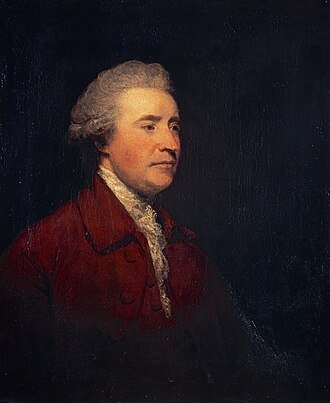 AuthorEdmund Burke1729–1797
A Philosophical Enquiry into the Origin of Our Ideas of the Sublime and Beautiful is an aesthetic treatise published in 1757 by the Anglo-Irish politician and writer Edmund Burke, with a second edition in 1759. It is the first complete philosophical exposition to separate the beautiful and the sublime into two independent rational categories. The book attracted the attention of thinkers such as Denis Diderot and Immanuel Kant.
For Burke, the beautiful is that which is well formed and pleasing to the senses, while the sublime is that which has the power to overwhelm us and, ultimately, to threaten us. Burke questions the traditional idea that beauty depends on proportion or perfection, and proposes to explain the origin of both notions through a kind of causal analysis inspired by Aristotle. Thus he assigns to the beautiful a formal cause tied to love, a material cause in qualities such as smallness, smoothness or delicacy, and an efficient cause in the calming of our nerves. The sublime, by contrast, rests on fear, above all the dread of death, and on objects such as vastness, darkness or magnificence, which tense our nerves.
The preference the text gives the sublime over the beautiful is one of the factors that marked the shift from Neoclassical sensibility to Romanticism. Kant, though he valued the work, criticized Burke for merely gathering data without explaining the causes of the mental effects produced by both experiences, leaving that task to later thinkers.
Themes
Other works by Edmund Burke
Original Filopedia text based on Wikipedia (es) and Wikipedia (en) and Wikidata.