Han Feizi
collection of political and philosophical essays in the Legalist tradition · 300 BC
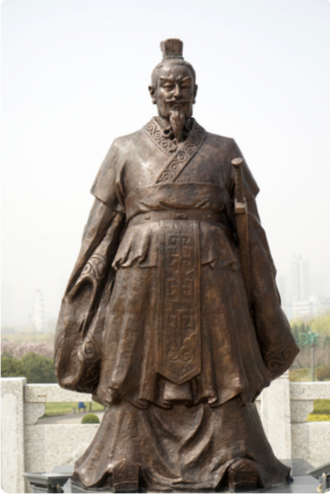 AuthorHan Fei279 BC–232 BC
The Han Feizi is an ancient Chinese text attributed to Han Fei, the Legalist political philosopher who lived roughly between 279 and 233 BCE. It is a collection of essays in the Legalist tradition that set out theories of state power and bring together the methods of earlier thinkers. Its 55 chapters, most of which date to the Warring States period, are the only text of this kind to survive fully intact. For its scope and coherence, it is usually regarded as the most mature Legalist work, and A. C. Graham called Han Fei the great synthesizer of Legalism.
The book describes a human nature driven by self-interest and proposes political methods for working with it in the service of the state and the ruler. The sovereign should observe quietly, apply the standard (fa) systematically to keep control and manage people, and avoid relying on worthy men who might not be trustworthy. To do this, Han Fei ties administration to a system of rewards and punishments, which he calls the two handles of power. A large part of the text deals with the ruler's relations with his ministers, who were seen as the people most likely to harm him in an age when rulers were often killed.
The Han Feizi also contains some of the earliest surviving commentaries on the Daodejing, especially chapters 20 and 21, which are generally regarded as later additions because of their ideological, lexical and stylistic differences. In the core chapters, Laozi appears as a reference for wu wei, effortless action, understood here as a technique of government. The dating of the work is debated: some chapters allude to the fall of states at the end of the Warring States period, which places their composition in those final decades, although the final compilation may be later.
The text covers administration, diplomacy, war and economics, and is valuable for its many anecdotes about China before the Qin. Its influence was considerable: according to tradition, Zhuge Liang attached great importance to it, and its ideas shaped statecraft in later dynasties.
Themes
Original Filopedia text based on Wikipedia (en) and Wikidata.