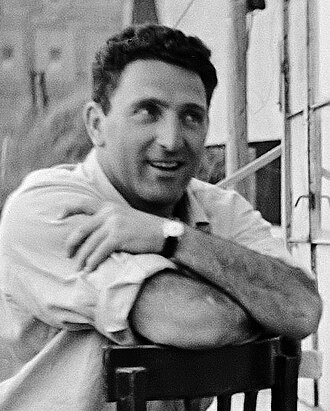
 AuthorIrwin Shaw1913–1984
Rich Man, Poor Man is a 1969 novel by Irwin Shaw. It belongs to the middle period of Shaw's work, before he turned in his last books to themes such as the inevitability of death. The title comes from the nursery rhyme "Tinker, Tailor". The novel first appeared as a short story in Playboy magazine and became an international bestseller when published as a book. It was later adapted into a 1976 television miniseries.
The novel is a sprawling work of more than six hundred pages and gathers many of the themes Shaw returned to throughout his fiction: Americans living as expatriates in Europe, the McCarthy era, children trying to break free from their parents' way of life, the social and political problems of capitalism, and the pain of personal relationships. From its first page, the book subtly signals the sad ending of the story.
Most of the book follows the three children of the German American couple Mary Pease and Axel Jordache: Gretchen, Rudolph and Thomas. Their lives unfold from the end of the Second World War to the late 1960s, in a small town in upstate New York where their parents run a bakery. The marriage of Mary and Axel is marked by hatred and resentment, and the third-person omniscient narration, filtered through the consciousness of different family members, presents a bleak and pessimistic view of humanity.
The plot is set in motion when Gretchen begins an affair with Teddy Boylan, the much older president of the company where she works. Boylan later influences her brothers as well, and he is the first outsider who opens their eyes to a world beyond their home. Although the miniseries reduced the story to a contrast between the virtuous brother and the wayward one, the novel is more complex: Rudolph cultivates relationships with people who can help him, while Gretchen and Thomas repeatedly entangle themselves with toxic people. After an act of vandalism, Thomas is sent away by his father, and his life follows a pattern of brief stability, trouble and flight. Shaw sets Rudolph's balanced judgment of Boylan against the wholly negative view held by Gretchen and Thomas.
The novel was a considerable commercial success and inspired television adaptations in the United States, the Soviet Union and Turkey, as well as a sequel, Beggarman, Thief, published in 1977.
Themes
Other works by Irwin Shaw
Original Filopedia text based on Wikipedia (es) and Wikipedia (en) and Wikidata.