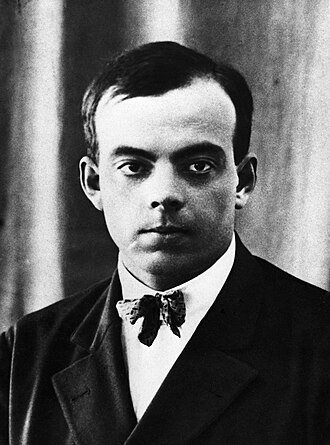
 AuthorAntoine de Saint-Exupéry1900–1944
The Little Prince is a short novel written and illustrated by the French writer and aviator Antoine de Saint-Exupéry. It was first published in April 1943 in the United States, in both English and French, by Reynal & Hitchcock. In France it could only appear after the Liberation, in 1946, because the author's works had been banned under the Vichy regime. Saint-Exupéry wrote it during his exile in New York, during the Second World War, when his health was already declining.
The story is narrated in the first person by a pilot who, after his plane breaks down in the Sahara desert, meets a boy who has come from another world. The little prince has travelled through several asteroids and to Earth, and on each he has met people whom he finds absurd: a king who wants only to be obeyed, a conceited man, a drinker ashamed of drinking, a businessman who counts stars he claims to own, a lamplighter who follows meaningless orders, and a geographer who writes about a world he has never explored. Each encounter criticises the practical and superficial outlook of adults. Though it looks like a children's story, the tale deals with the meaning of life, loneliness, friendship, love and loss.
The encounter with the fox is the heart of the book. It teaches the prince that to tame something is to create bonds, and that what makes a rose precious is not its rarity but the time and affection given to it. From this comes the famous idea that what is essential is invisible to the eye, and that one sees well only with the heart. The work also reflects on responsibility toward those we love.
Its watercolour illustrations, made by the author himself, are inseparable from the text and from its simple, melancholic tone. The novella has enjoyed an extraordinary reception: it is one of the best-selling books in history and the most widely read and translated book written in French. Its success has led to adaptations in audio, theatre, film, television, ballet and opera, and it continues to be read by children and adults alike.
Themes
Other works by Antoine de Saint-Exupéry
- Southern Mail 1929
- Night Flight 1931
- Wind, Sand and Stars 1939
- Flight to Arras 1942
Original Filopedia text based on Wikipedia (es) and Wikipedia (en) and Wikidata.