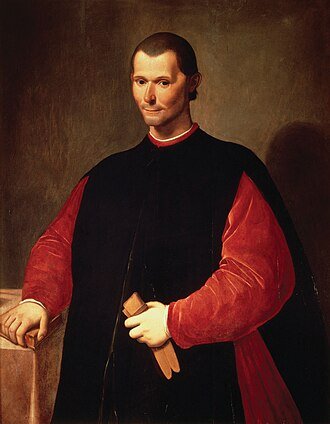
 AuthorNiccolò Machiavelli1469–1527
The Prince is a political treatise by the Florentine diplomat and political thinker Niccolò Machiavelli, written in the form of an instruction guide for new rulers. Although it is one of his shortest works, it is the most famous, and it gave rise to the word "Machiavellian", now used pejoratively. Machiavelli wrote it around 1513, but it was not printed until 1532, five years after his death, with the permission of Pope Clement VII. Although it looks like a traditional "mirror for princes", it departed from that genre in essential ways, and it provoked controversy almost from the moment the manuscript began to circulate.
The book was written in Italian rather than Latin, following a practice that had grown popular during the Renaissance. Its central claim is that to keep power a ruler must attend to the effective reality of things rather than to abstract ideals, and that effectiveness sometimes demands actions that ordinary morality would condemn. Machiavelli argues that the glory and survival of the prince and the state can justify resorting to immoral means, provided they are used with prudence and at the right moment. This view clashed directly with the political and ethical doctrines of the Catholic Church and of scholasticism, which is why many readers found it scandalous.
The text is divided into chapters that classify types of principality. Machiavelli separates hereditary principalities, which are easier to govern, from new ones, which are the real focus of his analysis. Among new principalities he distinguishes wholly new states from "mixed" ones, formed by adding territories to an existing state. He illustrates his points with examples from antiquity, the Bible and recent history, including Rome, Alexander the Great and Cesare Borgia, whose military and political career he praises in several passages. He also examines how to hold conquests, how to treat subject peoples and when force is appropriate, and he gives special attention to the ruler who gains power through his own virtue compared with one who owes it to fortune.
The work has been studied and debated for centuries and has shaped later political thought. It is often regarded as one of the first texts of modern political philosophy, in which practical effectiveness takes precedence over ideals. Frederick II of Prussia responded to it with his Anti-Machiavel. Its ideas about power, the preservation of the state and the relation between ethics and politics continue to provoke discussion.
Themes
Books to read
- The Prince EnglishEPUB 212 KBRead online
Other works by Niccolò Machiavelli
- Discourses on Livy 1531
Original Filopedia text based on Wikipedia (es) and Wikipedia (en) and Wikidata.