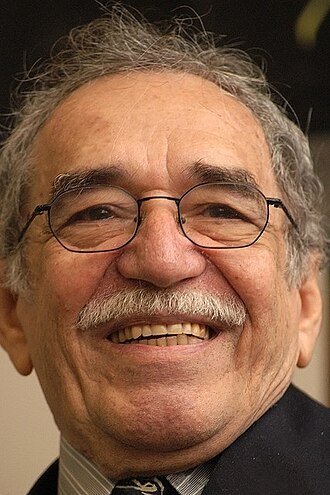
 AuthorGabriel García Márquez1927–2014
The Autumn of the Patriarch is a 1975 novel by the Colombian writer Gabriel García Márquez. Often read as a fable about the loneliness of power, it is set in an invented country on the Caribbean coast, ruled by an aging dictator who embodies the archetype of the Latin American strongman. The author himself called it a poem on the solitude of power. Its old general barely remembers his own age and has no formal schooling, yet he holds on to office through violence, flattery and fear.
The book is divided into six sections, each retelling the same story of the endless power of its protagonist. Its style is unusual: long paragraphs, few full stops, and a weaving of narrative viewpoints that produces a kind of multiple monologue in which several voices speak without being identified. It is generally regarded as the most complex and elaborate of García Márquez's novels, and is often described as a long prose poem.
The dictator draws on a range of real leaders, among them Gustavo Rojas Pinilla, Francisco Franco, François Duvalier and Juan Vicente Gómez. One of the most striking features of the book is the near-godlike status of its central figure and the mixture of awe and dread with which his people regard him. In Spain, where it was widely read, it was reported to be the best-selling book of 1975.
Themes
Other works by Gabriel García Márquez
Original Filopedia text based on Wikipedia (es) and Wikipedia (en) and Wikidata.