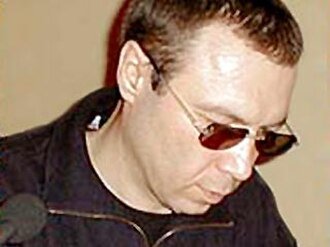
 AuthorVictor Pelevinb. 1962
Chapayev and Void is a novel by the Russian writer Victor Pelevin, published in 1996. It moves between two periods: revolutionary Russia during the Civil War and Moscow in the early 1990s. The book is narrated in the first person by Peter Pustota, whose surname literally means "void". He is a poet who flees from Saint Petersburg, takes on the identity of a Bolshevik political commissar and meets Vasily Chapayev, an unusual army commander loosely based on the real figure.
In the present day, Peter wakes up in a Moscow psychiatric hospital with his memories of the revolution as his only baggage. He shares a room with three other patients, each living behind a fabricated identity: a supposed Japanese employee who practises seppuku, a gangster of the so-called New Russians who recounts psychedelic visions, and a man who believes he is the heroine of a soap opera. As the book progresses, the reader cannot tell which of Peter's identities is the real one, or whether a real identity exists at all.
The novel blends social satire, dreamlike episodes and philosophical dialogues drawing on Zen Buddhism, especially the notion of emptiness (shunyata) and the idea that the self is an illusion. Its fragmentary structure and mixture of humour and disorientation made it one of Pelevin's most celebrated works. Some critics initially accused it of advocating solipsism and radical detachment from the world, but it is now widely regarded as a contemporary Russian classic, and it was adapted into a film in 2015.
Themes
Other works by Victor Pelevin
- Generation "P" 1999
- Empire V 2006
Original Filopedia text based on Wikipedia (en) and Wikidata.