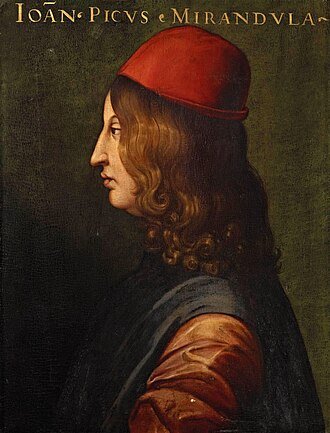
 AuthorGiovanni Pico della Mirandola1463–1494
The Oratio de hominis dignitate is a philosophical oration written in Latin in 1486 by the Italian humanist Giovanni Pico della Mirandola. Pico composed it as an introduction to a public debate on his nine hundred theses, planned for early 1487, in which he intended to defend a vast body of learning that included philosophy, theology, natural magic, Kabbalah and Hermetic wisdom. That debate never took place: Pope Innocent VIII suspended it and appointed a commission to examine the theses for heresy. The commission found some propositions suspect, but the pope eventually declared the author free from censure, while condemning the theses in general. The oration was not published until 1496, two years after Pico's death, in the complete works assembled by his nephew Gian Francesco Pico. The phrase "de hominis dignitate" was added to the title in later editions.
The oration argues that human dignity lies in the freedom of the will and the intellect. In Pico's retelling of the Genesis account, God, having created the world and filled the chain of being with angels, animals and plants, assigned no fixed place to man. Instead, He gave him the capacity to shape his own nature. A human being may sink toward the vegetable condition through ignorance and indifference, or rise toward the angelic and the divine through study and philosophy. In contrast to the theocentric outlook of medieval thought, the work places man at the centre of the universe as the architect of his own destiny. Pico also admits that the path is difficult and that the multiplicity of philosophies reflects the diversity of the human mind, and so he proposes a synthesis of the doctrines he considers valuable.
The work is often regarded as a manifesto of the Renaissance and had considerable influence on humanism, with notable reception in Spain through writers such as Fernán Pérez de Oliva and Juan Luis Vives. Its idea that man can transform himself through his own will helped, over time, to shift the view of the artist from mere craftsman to creative genius.
Themes
Original Filopedia text based on Wikipedia (es) and Wikipedia (en) and Wikidata.