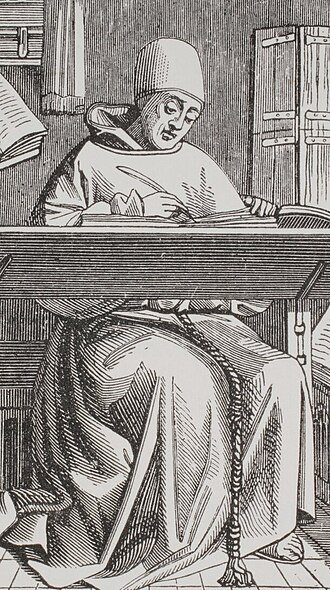
 AuthorMarsilius of Padua1275–1342
Defensor pacis (The Defender of Peace) is a treatise by Marsilius of Padua, an Italian medieval scholar, published in 1324. It arose from the conflict between Louis IV, Holy Roman Emperor, and Pope John XXII. Strongly anticlerical in tone, it provoked controversy that lasted throughout the century and was censured by Popes Benedict XII and Clement VI.
Its central claim is that the State is the defender of public peace, the most indispensable benefit of human society, and that sovereignty rests with the people. The law should express the will of the most important part (valentior) of the citizens, who would elect or appoint the head of government; that ruler would have only a limited armed force and would answer to the people for breaches of the law. Marsilius holds that the chief cause of human discord is the Papacy, which he describes as a fictitious power built through successive usurpations. He denies popes, bishops and clergy any coercive jurisdiction or right to rule in temporal matters, and any power of excommunication or interdict. He proposes abolishing tithes and having civil authority seize much of the church's property and appoint to benefices. The pope would keep only an honorary pre-eminence, and supreme authority in the church would lie with a council summoned by the emperor.
The work extends the tradition of Dante's De Monarchia by separating secular power from religious authority. John XXII denounced several of its ideas about the Church as heretical. Although democratic in its foundations, its doctrine could be turned into an imperialist argument, and in 1535 Thomas Cromwell commissioned William Marshall to translate it into English to support the Royal Supremacy.
Themes
Other works by Marsilius of Padua
- Defensor minor 1400
Original Filopedia text based on Wikipedia (en) and Wikidata.