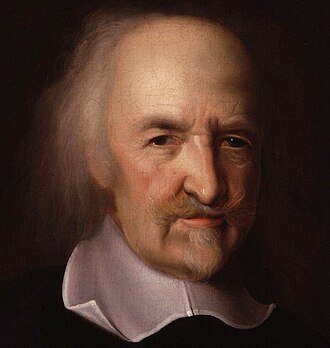
 AuthorThomas Hobbes1588–1679
De Cive (On the Citizen) is one of Thomas Hobbes's major works and the first of a trilogy on human knowledge, followed by De Corpore (On the Body, 1655) and De Homine (On Man, 1658). It was first published in Latin in Paris in 1642, with further Latin editions in Amsterdam in 1647. The English version appeared in London in 1651 under the title Philosophicall Rudiments Concerning Government and Society.
Hobbes wrote the work amid growing political turmoil in the years leading to the English Civil War of 1642. Its composition was completed in November 1641, before the conflict broke out, so its arguments, which Hobbes would later develop more fully in Leviathan, cannot be explained solely by that war. The text is divided into three parts: Liberty, which describes humanity's natural condition and the laws of nature; Dominion, which argues for the necessity of a stable government; and Religion, which addresses religious matters. It is here that the famous phrase 'war of all against all' (bellum omnium contra omnes) first appears.
The book had a considerable impact on European political debate and laid the groundwork for the modern social contract theory that Hobbes would go on to develop.
Themes
Other works by Thomas Hobbes
- Leviathan 1651
- De Corpore 1655
Original Filopedia text based on Wikipedia (es) and Wikipedia (en) and Wikidata.