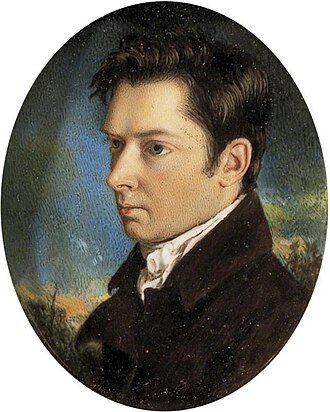
 AuthorWilliam Hazlitt1778–1830
Characters of Shakespear's Plays is a book of criticism published in 1817 by the English essayist and critic William Hazlitt (1778–1830). It was written in reaction to the neoclassical approach to Shakespeare represented by Samuel Johnson, and under the influence of the German critic August Wilhelm Schlegel. It was among the first studies in English to follow Schlegel's manner, and, together with the work of Samuel Taylor Coleridge, it helped prepare the growing admiration for Shakespeare's genius that marked later nineteenth-century criticism. It was also the first book to cover all of Shakespeare's plays, conceived as a guide for the general reader.
Hazlitt was known as a theatre critic, and in his reviews he often went deeper into the literary qualities of the plays he discussed. The book grew out of those reviews. Its starting point was Edmund Kean's London debut as Shylock in January 1814, and the notices Hazlitt wrote about Kean's Shakespearean performances. After reading Schlegel's lectures in 1816, Hazlitt felt there was room for a book that would examine every Shakespearean character in detail. Part of the material came from earlier articles, mainly in the Examiner, and the rest was written in 1816 and early 1817. The chapters cover the thirty-five plays Hazlitt considered genuine, with further chapters on the doubtful plays and on the poems and sonnets.
The characters are the main focus, approached with a personal slant and memorable phrasing, such as the well-known line "It is we who are Hamlet." His psychological insights anticipated many readings that would prevail in later criticism. He also discusses dramatic structure, poetry and the central theme of each play, and he often argues that staging cannot fully do justice to Shakespeare, though he admires certain performances, especially Kean's.
The first edition, issued in July 1817, sold out within weeks and was warmly received, winning admirers such as the poet John Keats. The second edition of 1818, however, met harsh attacks in the Tory literary magazines of the day, whose personal and political reviews brought its sales to an end. For decades the book lost influence, and only at the close of the nineteenth century did scholars return to it. In the twentieth century critics such as A. C. Bradley took its readings of characters like Shylock, Falstaff, Iago and Caliban seriously, though Hazlitt was later faulted for treating dramatic figures as real people. Today it is regarded as one of the three most notable Shakespearean studies of the Romantic period, alongside those of Schlegel and Coleridge.
Themes
Other works by William Hazlitt
Original Filopedia text based on Wikipedia (en) and Wikidata.