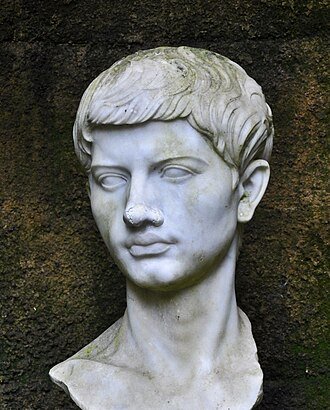
 AuthorVirgil69 BC–18 BC
The Eclogues, also known as the Bucolics, are the first of the three major works of the Roman poet Virgil. They consist of ten poems called eclogues, from a Greek word meaning "selection" or "extract". Virgil took as his model the Greek pastoral poetry of Theocritus, whose idylls—"little scenes"—presented herdsmen who sing and converse in rural landscapes. Theocritus, born in Syracuse around 310 BC, later worked in Alexandria alongside poets such as Callimachus and Apollonius of Rhodes, sharing their taste for the brief, refined and new. Rome knew this genre largely through such imitations, and Virgil gave it a distinctly Roman turn.
The collection was generally written between 41 and 37 BC, although some scholars propose a definitive publication around 35 BC. Virgil owed the impulse to write them largely to Gaius Asinius Pollio, and the political context is decisive: the backdrop is the civil wars and the confiscation of lands that affected his own family after the battle of Philippi. The poems thus mix an idealised countryside with grief over violence and hope for peace. The final order does not match the order of composition, since Virgil rearranged the material on aesthetic grounds. Many critics see a symmetrical structure centred on the fifth eclogue, and verbal echoes between corresponding poems reinforce this design.
The first eclogue, a dialogue between Meliboeus, who has lost his land, and Tityrus, who keeps his thanks to a "god" he met in Rome, frames the tension between loss and contentment. The second gives voice to Corydon, who pines for the boy Alexis. The third is a singing contest between two shepherds, and the fourth, the most famous, announces the birth of a child who will bring back the Golden Age; his identity has inspired many hypotheses, and in late antiquity it was read as a Christian prophecy. The fifth mourns the death of the herdsman Daphnis and raises him to divinity, while the sixth, more mythological in tone, records Silenus' song on the origins of the world. The later eclogues explore love, poetic rivalry and the memory of lost fields, up to the tenth, which closes the collection.
The work established Virgil as a prestigious poet in his own lifetime and opened the way for European pastoral poetry that followed, from the Renaissance to writers such as Milton. Its blend of rural idealisation, political reflection and personal feeling made it a lasting model in Western poetry.
Themes
Other works by Virgil
Original Filopedia text based on Wikipedia (es) and Wikipedia (en) and Wikidata.