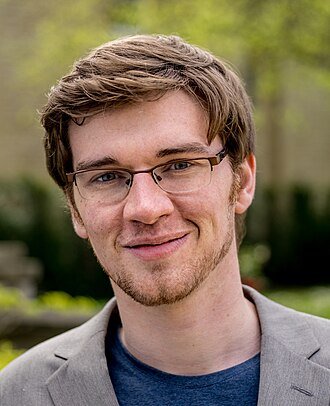
William MacAskill
b. 1987 · Scottish philosopher of moral philosophy and promoter of effective altruism
William MacAskill (born 1987) is a Scottish philosopher who works on moral philosophy and is one of the leading figures of the effective altruism movement, which applies reason and evidence to decisions about how to help others. An associate professor at the University of Oxford, he is known for arguing that charitable choices can be measured and compared.
Born William Crouch, he grew up in Glasgow. By his own account, at fifteen, struck by the number of people dying of AIDS, he resolved to earn a lot of money and give away half of it. At eighteen he read Peter Singer's 1972 essay 'Famine, Affluence, and Morality', which shaped his philosophical and charitable interests. He studied at Cambridge and Oxford and, with Toby Ord, co-founded Giving What We Can in 2009, followed by 80,000 Hours and the Centre for Effective Altruism. His first book, Doing Good Better (2015), argues that applying data and scientific reasoning can greatly increase the impact of giving. His later book, What We Owe the Future (2022), defends longtermism: future people count morally as much as people alive today, and our choices can tilt the future toward good or bad outcomes. His influence spans moral philosophy and the wider debate about how to use money and careers to do more good.
Key ideas
- Effective altruism: doing good well means comparing outcomes and choosing the interventions that produce the most well-being for each resource spent.
- Evidence-based giving: data and scientific reasoning can separate forms of help that look noble from those that barely change anything.
- Earning to give: a high-income career can be a way to contribute more to effective causes, an idea he himself qualified soon after publishing it.
- Longtermism: people who do not yet exist deserve the same moral weight as those alive now, and humanity's future depends partly on present choices.
Works in Filopedia
Curiosities
A chosen surname
He and his then wife, Amanda Askell, took the surname MacAskill, the maiden name of her maternal grandmother.
An unexpected endorsement
Elon Musk described What We Owe the Future as 'a close match for my philosophy'.
Teachers and influences
Influenced by
- Peter Singer b. 1946
Original Filopedia text based on Wikipedia (es) and Wikipedia (en) and Wikidata.