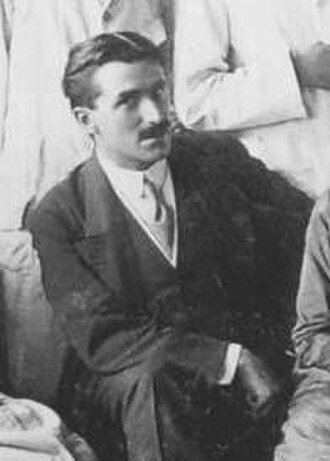
Ugo Cerletti
1877–1963 · Italian neurologist, inventor of electroconvulsive therapy
Ugo Cerletti (Conegliano, 1877 – Rome, 1963) was an Italian neurologist and psychiatrist best known for developing electroconvulsive therapy, a treatment that induces a controlled seizure with electric current to relieve certain mental disorders. He worked in the first half of the twentieth century, when psychiatry was searching for effective biological treatments, and his method has had a lasting influence on clinical practice.
He studied medicine in Rome and Turin, then specialised in neurology and neuropsychiatry. His early research concerned the histology and histopathology of nervous tissue, and he showed how it responds to different pathogenic agents. He trained with leading neurologists in Paris, Munich and Heidelberg, and directed institutes in Milan, Bari and Genoa before taking the chair of mental and nervous diseases in Rome.
Electroconvulsive therapy grew out of animal experiments on the neuropathological effects of repeated epileptic seizures. Cerletti and his assistant Lucio Bini first applied the method to a patient in 1938, and it spread quickly worldwide, replacing metrazol and insulin treatments because it was simpler and less frightening. Today it is mainly reserved for severe depression that has not responded to other treatments.
Key ideas
- Induced seizure as therapy: a controlled electric shock triggers a brief convulsion that can alter brain chemistry and relieve certain mental disorders.
- A simpler alternative to convulsive drugs: electricity replaced metrazol and insulin because it was more practical, cheaper and less distressing for patients.
- Animal experimentation as a foundation: his idea grew from studies of the neuropathological consequences of repeated seizures, first conducted on dogs and other animals.
- The epilepsy-schizophrenia link: the belief that convulsions protected against schizophrenia shaped his clinical hypothesis.
Curiosities
The slaughterhouse idea
According to tradition, Cerletti was inspired by seeing cattle stunned with electric shocks before slaughter.
Nobel nomination
Cerletti and Bini were nominated for the Nobel Prize in Physiology or Medicine for their work in the 1930s.
Original Filopedia text based on Wikipedia (es) and Wikipedia (en) and Wikidata.