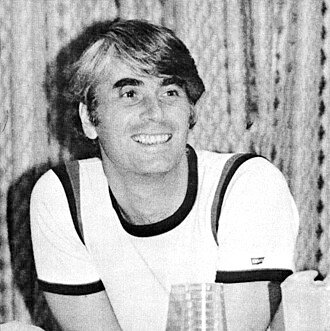
Robert Nozick
1938–2002 · American political philosopher and epistemologist
Robert Nozick (New York, 1938 - 2002) was an American philosopher who taught at Harvard and also at Columbia, Oxford and Princeton. Trained in the analytic tradition of the mid-twentieth century, he worked on decision theory, epistemology, philosophy of mind and metaphysics, but his name is most closely tied to political philosophy. He is remembered today as the leading academic defender of the minimal state against the egalitarian liberalism of John Rawls.
He studied at Columbia, graduating in 1959, and at Princeton, where he completed his doctorate in 1963 under Carl Hempel. From 1963 to 1964 he was a Fulbright Scholar at Oxford. As a young man he was drawn to socialism and at Columbia he founded a local chapter of a student organization devoted to industrial democracy. His move toward libertarianism came through reading Friedrich Hayek and other defenders of capitalism. By his own account he was pulled into libertarianism somewhat reluctantly, since he could not find satisfying replies to its arguments.
His best-known book, Anarchy, State, and Utopia (1974), answers two opponents. Against anarcho-capitalists such as Murray Rothbard, he argues that a minimal state, limited to protection against force, fraud and theft and to the administration of courts, could arise without violating anyone's rights. Against Rawls, whose A Theory of Justice (1971) assigns a fair distribution of the gains of social cooperation to a central authority, Nozick insists that goods have a history. Someone made or transferred them, so their ownership cannot be judged without looking at that past. This led to his entitlement theory, a historical rather than patterned account on which a distribution is just when it results from legitimate acquisition and transfer, supplemented by a principle of rectification for past wrongs. In the third part of the book he sketches a liberal utopia in which many different communities can coexist and each person can choose how to live.
His other works pursued the same concern for careful argument. Philosophical Explanations (1981) proposed a counterfactual account of knowledge, the so-called tracking theory, which did not treat justification as a necessary condition for knowing. The Examined Life (1989), written for a general readership, took up love, death, faith and the meaning of life. The Nature of Rationality (1994) offered a theory of practical reason, and Socratic Puzzles gathered essays on a wide range of subjects. His last work, Invariances, explored objectivity through physics and biology.
Nozick is also known for his thought experiments. The utility monster shows how average utilitarianism might sacrifice the many for one individual. The experience machine was meant to show that ethical hedonism is inadequate, since few would choose to plug into a machine that produced pleasant experiences. His influence reaches into political theory, where the debate over the minimal state continues, and into contemporary epistemology. He died in 2002 after a long struggle with stomach cancer.
Key ideas
- Minimal state: only a state that protects individual rights and does not extend into redistribution can be morally justified.
- Entitlement theory: whether a distribution is just depends on how goods were acquired and transferred, not on a fixed end pattern.
- Principle of rectification: holdings obtained through violence or fraud should be returned to their rightful owners.
- Tracking theory: we know something when our belief follows the truth across relevant counterfactual situations.
- Critique of hedonism: the experience machine suggests that we value more than pleasant sensations.
Where to start
Anarchy, State, and Utopia 1974
Anarchy, State, and Utopia is the best entry point into Nozick: a clear, direct book that defends a minimal state and uses vivid examples to show why justice depends on the legitimate ownership of what we hold. You will see a complete theory built from simple premises, and how the author answers his critics with imagination and rigor.
Next: Philosophical Explanations. Philosophical Explanations broadens Nozick's horizon into metaphysics, epistemology and ethics, showing that his thought goes far beyond politics.
Works in Filopedia
Curiosities
The Wilt Chamberlain case
To illustrate his theory, Nozick uses the basketball player Wilt Chamberlain. If fans voluntarily pay to watch him play, large inequalities emerge, yet Nozick argues the outcome remains just because every exchange was free.
Utilitarianism for animals, Kantianism for people
While exploring animal rights, Nozick coined this phrase to describe a view in which humans are treated as ends in themselves while animals count only for the pleasure they produce.
A national prize
Anarchy, State, and Utopia won the National Book Award in the Philosophy and Religion category the year after its original publication.
Original Filopedia text based on Wikipedia (es) and Wikipedia (en) and Wikidata.