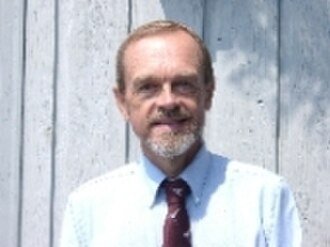
Philip Kitcher
b. 1947 · British philosopher of science, biology and pragmatism
Philip Kitcher (born London, 1947) is a British philosopher and emeritus John Dewey Professor at Columbia University. His work centres on the philosophy of science, with particular attention to biology and mathematics, and in recent years on the pragmatism of John Dewey.
He studied mathematics and history and philosophy of science at Cambridge and completed his PhD at Princeton in 1974, where he worked closely with Carl Hempel and Thomas Kuhn. After teaching at Vermont, Minnesota and San Diego, he joined Columbia, where he chaired its Contemporary Civilization programme. He edited Philosophy of Science from 1994 to 1999 and has served as president of the American Philosophical Association.
Kitcher's writings connect questions in the philosophy of biology and mathematics with epistemology, metaphysics and ethics. For him, good science combines independently testable auxiliary hypotheses, unification around a few problem-solving strategies, and fecundity in raising new questions. Abusing Science (1982) criticised creationism, and The Ethical Project (2011) defended a naturalistic approach to ethics. His influence extends through contemporary philosophy of science and public debate on science, religion and democracy.
Key ideas
- Independent testability: an auxiliary hypothesis should be checkable apart from the problem it was introduced to solve.
- Unification: a sound science explains many phenomena with one strategy or a small family of strategies.
- Fecundity: a good theory opens new questions and lines of inquiry, and its incompleteness is a source of progress.
- Ethical naturalism: morality can be understood through evolution and social life, without supernatural foundations.
- Pragmatism: philosophy should reconstruct traditional problems in a unifying way, in Dewey's manner.
Original Filopedia text based on Wikipedia (es) and Wikipedia (en) and Wikidata.