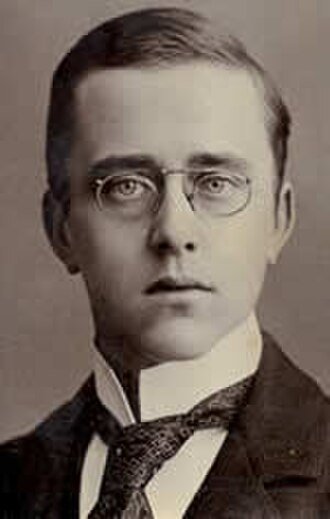
Lionel Giles
1875–1958 · British sinologist, translator and writer
Lionel Giles (born in Sutton, 1875 – died 1958) was a British sinologist, writer and translator, and the son of the diplomat and sinologist Herbert Giles. He is remembered above all for his English translations of classical Chinese texts, which for decades were a standard point of reference for English-speaking readers. He worked at the British Museum, where he became assistant curator and later keeper of the Department of Oriental Manuscripts and Printed Books.
He was the fourth son of Herbert Giles and his first wife, Catherine Fenn. He was educated privately in Belgium, Austria and Scotland before reading Classics at Wadham College, Oxford, where he graduated in 1899. Like many Victorian and Edwardian sinologists, he treated Chinese literature as a branch of the classics, and he used the Wade-Giles system of romanisation that his father had pioneered.
His best-known works are his 1910 versions of Sun Tzu's The Art of War and The Analects of Confucius. His Art of War sharply corrected the earlier translations by Everard Ferguson Calthrop, whose omissions and deliberate distortions he criticised. He also translated Taoist texts, including The Sayings of Lao Tzu, and works by Chuang Tzu and Lie Yukou, as well as The Book of Mencius. His work remains part of how Chinese thought has been introduced to Western readers.
Key ideas
- Prudent strategy: his Sun Tzu presents warfare as a discipline in which the best victory is the one won without fighting.
- Honesty in translation: he held that Chinese texts deserved the same philological rigour as Latin and Greek classics.
- Moral Confucianism: his Analects present Confucius's teaching on virtue, just conduct and good government.
- Taoism and the simple life: his translations of Lao Tzu and Chuang Tzu emphasise spontaneity, humility and detachment from ambition.
Curiosities
A rebuke to a predecessor
In the introduction to his translation of The Art of War, he sharply criticised the blunders and omissions in Calthrop's versions, which he accused of dishonesty.
A Taoist at heart
The sinologist John Minford records that Giles confessed to a friend that he was a "Taoist at heart", citing his fondness for a quiet life and his distance from combative scholarship.
Original Filopedia text based on Wikipedia (en) and Wikidata.