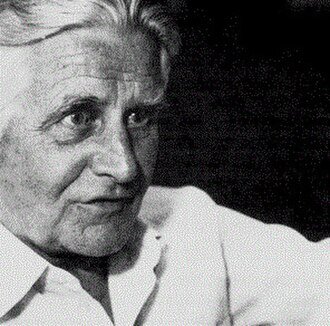
Karl-Otto Apel
1922–2017 · German philosopher of discourse ethics and transcendental semiotics
Karl-Otto Apel (Düsseldorf, 1922 – Niedernhausen, 2017) was a German philosopher whose work sits at the meeting point of analytic philosophy, the pragmatism of Charles Sanders Peirce, phenomenology and hermeneutics, and the critical theory of the Frankfurt School. He is best known for developing discourse ethics, or the ethics of communication, together with Jürgen Habermas, and for proposing a Kantian-inspired philosophy centred on language.
After the Second World War he studied at the University of Bonn, where he earned his doctorate in philosophy in 1949. He taught at Mainz, Kiel (1962 to 1969), Saarbrücken (1969 to 1972) and finally at Frankfurt am Main, where he remained until his emeritus status in 1990. His early work examined rhetoric and the philosophy of language in Renaissance humanism, including studies of Nicholas of Cusa and of the tradition running from Dante to Vico.
In his mature work Apel argued that some basic truths cannot be denied without self-contradiction, since they are presupposed by any act of argument. Against the falsificationism of Karl Popper and Hans Albert, he held that there are transcendental statements which cannot be refuted empirically yet can be defended philosophically. This led to his notion of pragmatic self-contradiction: someone who asserts something that denies the conditions of speaking itself contradicts themselves in the very act. His distinction between understanding (Verstehen) and explanation (Erklärung), set out in his 1984 book, revisits Dilthey's hermeneutics and Weber's sociology from a transcendental-pragmatic standpoint inspired by Peirce.
Apel called transcendental semiotics the study of the universal conditions of communication. He proposed that real communities of interpreters are oriented toward an ideal community, a normative horizon that serves as a standard for truth and justice. His influence reaches contemporary practical philosophy, debates about communicative reason, and the dialogue between analytic and continental traditions.
Key ideas
- Transcendental semiotics: the study of the universal conditions that make communication possible.
- Pragmatic self-contradiction: an assertion that denies the conditions of its own act of speaking contradicts itself when uttered.
- Ideal community of communication: a normative horizon that guides truth and justice within real communities of interpreters.
- Understanding and explanation: the distinction between grasping human meaning and causal explanation, reformulated from a transcendental-pragmatic perspective.
- Discourse ethics: an ethics grounded in the conditions of a dialogue in which all participants have equal rights.
Teachers and influences
Influenced by
- Ludwig Wittgenstein 1889–1951
- Martin Heidegger 1889–1976
- Jürgen Habermas 1929–2026
- Charles Sanders Peirce 1839–1914
Influenced
- Jürgen Habermas 1929–2026
- Hans-Hermann Hoppe b. 1949
Original Filopedia text based on Wikipedia (es) and Wikipedia (en) and Wikidata.