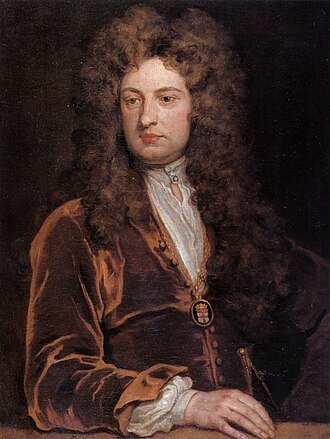
John Vanbrugh
1664–1726 · English architect and dramatist
John Vanbrugh (London, 1664 – Westminster, 1726) was an English architect and dramatist, best known for designing Blenheim Palace and Castle Howard. He worked in the late Restoration and early eighteenth century, wrote in English, and is remembered for a theatre that challenged the moral tastes of his day and for a architecture that came to be called English Baroque.
Much of Vanbrugh's early life is shrouded in legend. Born in London, he grew up in Chester, where his family had moved, probably because of the plague or the Great Fire of 1666. A long-repeated story claims he trained as an architect in France, but there is no firm evidence for it; the first sketches for Castle Howard look like the work of a beginner. His family were Protestant merchants of Flemish descent with useful aristocratic connections, though Vanbrugh himself never had much capital and lived with constant debt.
As a young man he was a committed Whig. He took part in the secret plans that brought William of Orange to the throne in the Glorious Revolution, and he was arrested at Calais in 1688 on a charge of espionage. He spent roughly four and a half years in French custody, including time in the Bastille, before his release in 1692. The experience left him with a lasting distrust of the French political system.
As a playwright he wrote The Relapse and The Provoked Wife, frank comedies about marriage that defended women's rights within it. They shocked conservative audiences, who attacked them, and Vanbrugh became one of the main targets of the moral critics. As a theatre manager at the Haymarket he lost heavily and sold the business in 1708.
His architecture was bold and monumental, which unsettled conservative taste, yet it left buildings that are still visited today. His legacy lies in English Baroque and in the way he joined the worlds of theatre and architecture throughout his career.
Key works
- The Relapse (1696), a comedy about infidelity and marriage that is still staged.
- The Provoked Wife (1697), a comedy defending women's position within marriage.
- Castle Howard, the seat of the Earls of Carlisle and an early major architectural work.
- Blenheim Palace, the great residence designed for the Duke of Marlborough.
Curiosities
A Flemish surname
His surname comes from the contracted form of 'Van Brugh', a name of Flemish origin. His family were Protestant merchants settled in London.
The Bastille
He spent part of his captivity in the Bastille in Paris as a political prisoner. He was released in 1692 in a prisoner exchange.
Original Filopedia text based on Wikipedia (es) and Wikipedia (en) and Wikidata.