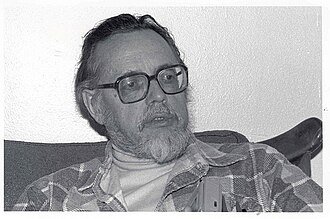
John Howard Yoder
1927–1997 · American Mennonite theologian and ethicist
John Howard Yoder (1927-1997) was an American Mennonite theologian and ethicist, one of the most influential defenders of Christian pacifism in the twentieth century. Writing from the Anabaptist tradition, he focused on the relationship between Christian faith and political power.
He studied at Goshen College and earned his doctorate at Basel, where he worked with Karl Barth. He taught at Mennonite seminaries and, from the mid-1960s, at the University of Notre Dame. His best-known book, The Politics of Jesus (1972), argues that the ethics of Jesus, centered on love and nonviolence, is a political alternative to coercive power. For Yoder, the church should not seek to dominate society but to be a community of disciples that witnesses to a different way of life. He criticized Constantinianism, the alliance between church and state, and the realism of Reinhold Niebuhr, and he rejected the search for a universal Enlightenment-style ethic. After his death, allegations emerged that he had sexually abused women over several decades, a fact that has clouded his legacy.
Key ideas
- Christian pacifism: nonviolence is not a secondary option but the way of following Jesus.
- Constantinianism: the church's alliance with political power is a constant temptation that distorts its mission.
- Being the church: the community of believers offers, through its own life, an alternative to a society built on violence.
- Rejection of universal ethics: what is expected of Christians need not be binding on everyone.
Curiosities
A critique handed to Barth
The night before his doctoral defense, Yoder left at Barth's office a critique of Barth's views on war, a document entirely separate from his dissertation.
A year in the greenhouses
After returning from Europe following the Second World War, and before starting his teaching career, he spent a year working at his father's greenhouse business in Wooster, Ohio.
A widely cited book
The evangelical magazine Christianity Today ranked The Politics of Jesus as the fifth most important religious book of the twentieth century.
Original Filopedia text based on Wikipedia (es) and Wikipedia (en) and Wikidata.