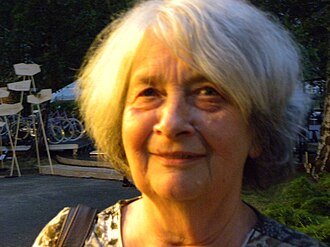
Isabelle Stengers
b. 1949 · Belgian philosopher of science, historian of science and epistemologist
Isabelle Stengers (born 1949) is a Belgian philosopher, known for her work in the philosophy and history of science. She trained as a chemist at the Université libre de Bruxelles, and her later thinking grew out of that background. She is the daughter of the historian Jean Stengers. She teaches the philosophy of science at the Université libre de Bruxelles and received the grand prize for philosophy from the Académie Française in 1993.
Her work has engaged with very different thinkers. She wrote with the chemist Ilya Prigogine on thermodynamics, chaos and the changing relationship between humans and nature, in books such as La Nouvelle Alliance. She collaborated with the psychiatrist Léon Chertok on hypnosis and with the sociologist Bruno Latour. She has written extensively on Alfred North Whitehead and on figures such as Michel Serres, Gilbert Simondon and Donna Haraway. In The Invention of Modern Science and Power and Invention she treats science as a historical practice shaped by its circumstances.
In her more recent work, gathered under the name Cosmopolitics, she argues that science should be considered alongside other ways of knowing and inhabiting the world, rather than placed above them. Her influence reaches into science studies, process philosophy and ecological thought.
Key ideas
- Science as situated practice: scientific knowledge is built within concrete historical, technical and social settings rather than existing apart from them.
- The relation between science and power: science is not neutral; its questions, institutions and forms of recognition respond to power relations that should be made visible.
- A new alliance with nature: with Prigogine, she advances a view in which time, irreversibility and instability belong to the physical world rather than being mere appearances.
- Cosmopolitics: the proposal of a shared world in which humans and non-humans are closely entangled, and in which scientific and political choices must be debated publicly.
- Whiteheadian thought: she takes up Whitehead's speculative philosophy to create concepts able to think experience and change in an open way.
Teachers and influences
Influenced by
- Ilya Prigogine 1917–2003
- Félix Guattari 1930–1992
- Donna Haraway b. 1944
Original Filopedia text based on Wikipedia (es) and Wikipedia (en) and Wikidata.