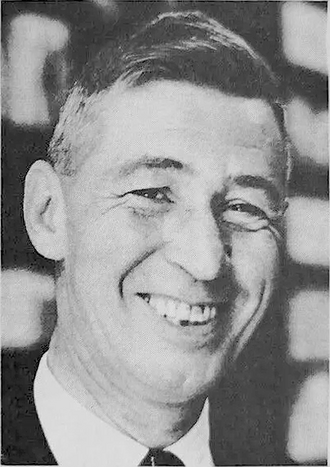
Georges Prosper Remi, known as Hergé, was a Belgian cartoonist who worked in French and shaped one of the most popular comic series of twentieth-century Europe. Born in Etterbeek, a district of Brussels, into a lower-middle-class family, he learned to draw largely on his own, sketching in the margins of his school books and in scouting publications. His best-known creation, The Adventures of Tintin, remains a reference point for comics and for the ligne claire style, with its clean, precise outlines that define his work.
His childhood unfolded in a Catholic household where reading was not a great passion, though he loved cinema and adventure novels. His time at the Saint-Boniface school, run by priests, and in the Scouts left a lasting mark: a moral outlook built on loyalty and keeping one's word, and an interest in nature and North America. His first drawings appeared in Scouting magazines in 1922, and in 1924 he began signing with the name Hergé, made from his reversed initials pronounced in French. In 1926 he launched Totor, his first series of his own. After military service he returned to Le Vingtième Siècle, a conservative Catholic daily edited by Abbé Norbert Wallez, who encouraged his self-education and gave him growing responsibilities.
In 1929 Tintin appeared: a young reporter whose first adventures, set in the Soviet Union and the Congo, were conceived as conservative propaganda for children. The unexpected success of the supplement led Hergé to continue the series and to create Quick & Flupke in 1930, followed by Jo, Zette and Jocko, a series he never felt entirely at home with. During the German occupation he kept publishing in Le Soir, a newspaper under Nazi control, a decision that brought accusations of collaboration after the war, although no charges were ever brought against him. Partly because of paper shortages, the strips became daily, with more gags and a turn towards escapist adventures centred on the characters.
His friendship with Zhang Chongren, a Chinese student, from the 1930s gave him a far more detailed knowledge of China, visible in The Blue Lotus. After the war he co-founded the magazine Tintin with Raymond Leblanc and set up Studios Hergé to share the workload. His carefully researched plots and clear draughtsmanship have influenced generations of cartoonists, especially in Europe. Tintin has inspired stage, radio, television, film and video game adaptations, and in Belgium he is honoured with a museum in Louvain-la-Neuve, opened in 2009.
Key works
- The Adventures of Tintin (1929): a reporter and his dog Snowy travel the world in the series that defined European comics.
- Quick & Flupke (1930): the mischief of two Brussels schoolboys, first published in the paper's children's supplement.
- The Adventures of Jo, Zette and Jocko (1936): a family-based series created at the publisher's request, which Hergé never fully enjoyed.
- The Blue Lotus: an adventure set in China, showing the research rigour he developed in the 1930s.
Works in Filopedia
Curiosities
A pen name from his initials
Hergé is the French pronunciation of his reversed initials R.G. Before settling on it, he experimented with other pseudonyms, such as Jérémie and Jérémiades.
A friend behind Tchang
The character Tchang Tchong-Yen, Tintin's friend, was inspired by Zhang Chongren, the Chinese student who introduced Hergé to Chinese culture and checked the Chinese text in the strips.
A crowd at the station
In May 1930, when the weekly serial ended, a crowd of readers gathered at a Brussels railway station, where the paper staged Tintin's arrival from the USSR with a young man dressed as the character.
Original Filopedia text based on Wikipedia (es) and Wikipedia (en) and Wikidata.