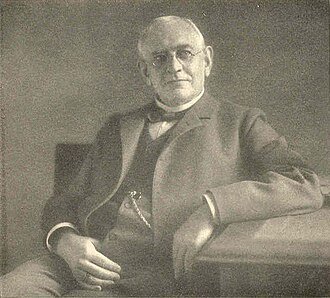
Friedrich Paulsen
1846–1908 · German neo-Kantian philosopher and educator
Friedrich Paulsen (1846-1908) was a German philosopher and educator of the neo-Kantian tradition, and a defender of epistemological realism. He is better remembered today for his writings on education than for his philosophy, yet his thought is significant for its attempt to connect Kant's critical project with Gustav Fechner's psychology.
Born in Langenhorn, in Schleswig, he studied at the Christianeum gymnasium, at Erlangen and at Berlin. He earned his doctorate at Berlin in 1871 under Friedrich Adolf Trendelenburg, qualified as a lecturer there in 1875, and became extraordinary professor of philosophy and pedagogy in 1878. In 1896 he succeeded Eduard Zeller as professor of moral philosophy in Berlin, where he died in 1908.
Paulsen was the most prominent follower of Fechner and gave his panpsychism considerable weight in his Introduction to Philosophy. He went further than Fechner by trying to give an epistemological account of our knowledge of the psychophysical. Accepting Kant's claim that inner sense gives us only mental states, he argued that this very consciousness already amounts to knowledge of the thing-in-itself, which Kant denied. The soul thus became a practical reality, known through the act of will: an instinctive drive that pursues ends without reasoning about means, distinct from rational desire.
His legacy is largely pedagogical, through works such as his history of teaching in German schools and universities and his study of German education. His influence reached debates on higher education and his student Günther Jacoby.
Key ideas
- Epistemological realism: knowledge refers to a reality that exists independently of the mind.
- Fechnerian panpsychism: all of reality has a psychic aspect, a doctrine Paulsen developed and defended.
- Will as knowledge of the thing-in-itself: inner experience of willing gives us access to something real beyond appearances.
- Hylozoism: the view that matter and life are bound together, which Paulsen considered close to modern biology.
Teachers and influences
Pupils
- Edmund Husserl 1859–1938
Influenced by
- Gustav Fechner 1801–1887
Influenced
- Mao Zedong 1893–1976
Original Filopedia text based on Wikipedia (en) and Wikidata.