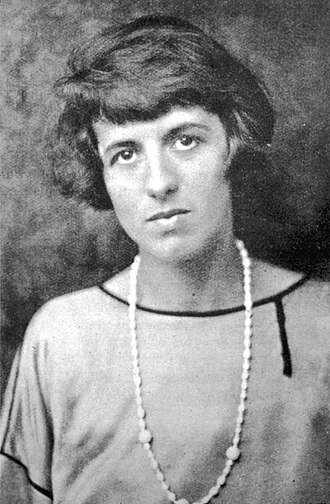
Enid Blyton was an English children's writer, born in 1897 in East Dulwich, south London, and died in 1968. Her books, aimed mainly at young readers, became some of the best-selling children's literature in English and have been translated into ninety languages, placing her among the most translated authors in the world. Her significance lies both in her commercial success and in the long debate about the literary quality and the values her stories conveyed.
She was the eldest of three children. Her father, a cutlery salesman, nurtured her interest in nature, gardening, music, literature and theatre, while her mother shared few of those pursuits. When Enid was thirteen, her father left the family to live with another woman, an event that marked her deeply and that, over time, left her largely estranged from her mother. She attended a school in Beckenham between 1907 and 1915, where she excelled at sports and writing. After considering a career in music, she chose writing and, having completed her teacher training in 1918, worked as a nursery governess for an architect's children in Surbiton.
Her literary career took off in the years after the First World War. She won an essay competition in 1921 and published her first book, a collection of poems, in 1922. She then began contributing to magazines and annuals, and in the 1930s she established herself with series such as Old Thatch and The Enchanted Wood. Her output was enormous, at times close to fifty books a year, which led to rumours that she used ghost writers, a claim she denied. Her style is direct and brisk, with a strong emphasis on adventure, friendship and children's independence, though critics increasingly pointed to its simplicity and repetition. Among her best-known creations are The Famous Five, The Secret Seven and the wooden doll Noddy, which generated many sequels, adaptations and spin-off products.
Her books were hugely popular for decades, but from the 1950s they attracted criticism for their simplicity and for stereotypes that were judged racist, xenophobic and sexist. Some libraries and schools withdrew them, and for a period the BBC declined to broadcast her stories. Later, her texts were revised for contemporary editions, which still reach a wide audience. Her legacy is twofold: she shaped generations of readers, and she remains a case study in how judgements of children's literature change over time.
Key works
- The Famous Five (1942), the first of a series of mystery and adventure novels about four siblings and their dog.
- The Secret Seven (1949), adventures of a group of children who join forces to solve mysteries.
- The Enchanted Wood (1939), fantasy stories set in a magical tree inhabited by storybook characters.
- Noddy (1949), a series starring a wooden doll living in a toyland village.
- Malory Towers (1946), a novel series about life at an English girls' boarding school.
Where to start
The Famous Five 1942
Famous Five is the most representative series to start with Enid Blyton: adventure and mystery novels about four siblings and their dog, with a brisk pace and simple language. Readers will find clues, dangers and friendship, a faithful sample of the author's storytelling style.
Next: The Secret Seven. The Secret Seven continues the same juvenile mystery formula, but with a group of child detectives who meet in a secret society.
Works in Filopedia
- The Famous Five 1942
- The Secret Seven 1949
- Noddy 1949
Curiosities
A vast publishing legacy
Her books have sold in very large numbers and have been translated into ninety languages. She is compared with authors such as Agatha Christie and Jules Verne in terms of translations.
An intuitive writing process
According to her own account, she wrote her stories with little planning, letting her imagination guide her as she typed.
Teachers and influences
Influenced
- Chimamanda Ngozi Adichie b. 1977
Original Filopedia text based on Wikipedia (es) and Wikipedia (en) and Wikidata.