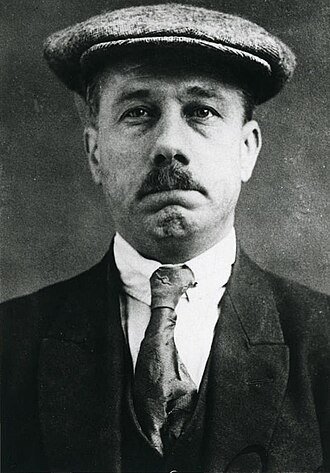
B. Traven
1882–1969 · Novelist of uncertain identity, German-language writer who lived in Mexico
B. Traven was the pen name of a novelist who wrote in German and whose real name, nationality and date of birth remain disputed. He spent decades in Mexico, and most of his fiction is set there. His work, written between the wars, deals with exploitation and colonial injustice, and it was widely read in his lifetime and remains known for its critical view of capitalism.
The identity most scholars accept links him with Ret Marut, a German stage actor and anarchist pamphleteer who edited a radical magazine called Der Ziegelbrenner (The Brick Burner). Marut was arrested in London in 1923 as an unregistered foreigner. During that process he gave the name Hermann Albert Otto Maximilian Feige, born in 1882 in Schwiebus, though the writer often carried borrowed papers, so even that attribution is questioned. After his release he went to Mexico, where by about 1924 he appears as Traven Torsvan.
In Mexico he lived for long periods north of Tampico and, from about 1930, near Acapulco. His first novel, published in installments in the Berlin daily Vorwärts in 1925 under the title Die Baumwollpflücker, appeared in book form as Der Wobbly. The Death Ship followed in 1926, and The Treasure of the Sierra Madre in 1927, which is his best-known book. His style mixes adventure with social protest, and his characters are often people without a homeland or papers who survive on the margins of the system.
Between 1930 and 1939 he wrote the Jungle Novels, a cycle of six books about indigenous communities in Chiapas forced to work in mahogany camps under inhuman conditions, which end in revolt and the outbreak of the Mexican Revolution. They are now his most studied works.
The figure of Hal Croves, a supposed agent who negotiated his rights with Hollywood and publishers, fuelled speculation for years. After Croves died in Mexico City in 1969, his widow Rosa Elena Luján revealed that both names belonged to the same man. His legacy lies in the spread of his books across many languages and in a debate about his identity that is still open.
Key works
- The Death Ship (1926): a stateless sailor endures exploitation aboard a freighter that sails suspicious routes along the coasts of Europe and Africa.
- The Treasure of the Sierra Madre (1927): two gold seekers and a third companion face greed in the mountains of Mexico; it was adapted into a film in 1948.
- The Bridge in the Jungle (1929): a novel about the clash between indigenous cultures and white settlers in the Americas.
- The Carreta (1931): the first of the Jungle Novels, focused on indigenous workers in the logging camps.
- The Rebellion of the Hanged (1936): one of the Jungle Novels, in which workers' revolt leads to the Mexican Revolution.
Where to start
The Treasure of the Sierra Madre 1927
The Treasure of the Sierra Madre is an accessible, fast-paced adventure novel set in rural Mexico, following prospectors whose greed grows as they search for gold. Readers will find a direct story that ironically explores the destructive power of money and mistrust among companions, central themes of Traven's work.
Next: The Death Ship. The Death Ship widens his social scope to exploited sailors and stateless lives, with the same narrative drive and critique of power.
Works in Filopedia
Original Filopedia text based on Wikipedia (es) and Wikipedia (en) and Wikidata.