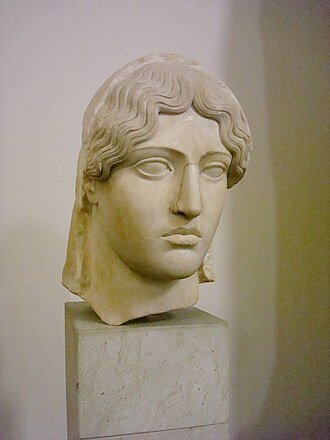
Aspasia
469 BC–399 BC · Milesian rhetorician and logographer of Periclean Athens
Aspasia of Miletus was a woman of Ionian origin who lived in Classical Athens in the fifth century BC and became one of the most talked-about figures of her time. She is remembered as a logographer, a writer of speeches for others, and as a teacher of rhetoric, although no direct testimony of her own work survives. Her importance rests above all on her relationship with the statesman Pericles and on the mark she left in the writings of her contemporaries. She is one of the best-attested women of the Greco-Roman world, yet one of the least known in her personal traits.
The dates of her birth and death are unknown. She is usually placed as born around 470 BC in Miletus, the Ionian city on the coast of Asia Minor in what is now Turkey. Her family was evidently wealthy, judging by the fine education she received, and her father was named Axiochus. What brought her to Athens is unknown, but by the middle of the fifth century BC she was living there as a foreigner without full civic rights. She spent most of her adult life in the city and moved in the circle of intellectuals and politicians around Pericles.
Her union with Pericles began around 450 or 445 BC and lasted until his death in 429 BC. Historians debate whether she was his concubine or whether they were in fact married, since Athenian law restricted legitimate marriage to citizens. They had a son, Pericles the Younger, who later held a military command and was executed after the battle of Arginusae. After Pericles died, she is believed to have married or joined the politician Lysicles, and she may have had another child with him. The reports of this second union come from comic poets and may be a joke.
Ancient sources portray her in very different ways. Comic writers cast her as a courtesan and even as the keeper of a brothel, and Plutarch repeated that image in his life of Pericles. Modern scholars, however, doubt these accounts, partly because many of their authors were satirists eager to discredit Pericles. Philosophers, by contrast, describe her as learned and gifted in rhetoric. It has even been suggested that she inspired Diotima, the wise woman in Plato's Symposium.
Her public visibility attracted attacks. She was blamed in part for the war against Samos in 440 BC, and according to Plutarch she was prosecuted for impiety, with the comic poet Hermippus as her accuser. Some versions say Pericles defended her in court with an emotional outburst, though the episode is doubtful. Her influence on Pericles and on the cultural life of the city remains a matter of debate.
Her reputation has been read in very different ways across the centuries. Early modern writers admired her as a cultivated woman; in the nineteenth century Plutarch's image of the courtesan gained weight, and from the twentieth century she has been claimed as a precursor of women's emancipation, though such readings say as much about their authors as about Aspasia herself.
Key ideas
- Rhetoric as the art of speech: Aspasia is remembered as a teacher of rhetoric and a thinker skilled in public argument.
- Education for women: her exceptional schooling set her apart from most Athenian women and made her a model of learned womanhood.
- Presence in public life: as a foreigner without a legal marriage, she enjoyed a social freedom that let her take part in the city's debates.
- Diotima and the Platonic dialogue: some scholars believe she inspired the wise Diotima in Plato's Symposium, though the hypothesis is not certain.
Curiosities
A trial for impiety
According to Plutarch, she was prosecuted for impiety, with the comic poet Hermippus as accuser. The historicity of the episode is doubtful.
A son with Pericles
Her union with Pericles produced Pericles the Younger, who later held a military role in Athens and was executed after the battle of Arginusae.
Original Filopedia text based on Wikipedia (es) and Wikipedia (en) and Wikidata.