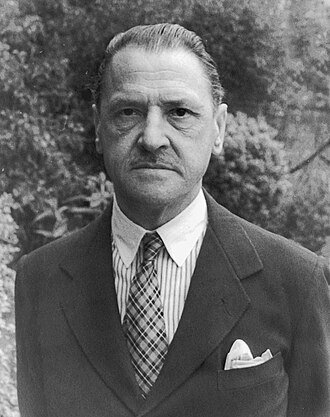
 AuthorWilliam Somerset Maugham1874–1965
Of Human Bondage is a novel by W. Somerset Maugham, published in 1915, and is generally regarded as his masterpiece. Maugham insisted it was a novel rather than an autobiography, yet much of it draws on his own life: he had a stammer instead of a club foot, lost his parents early and was raised by an aunt and uncle, and studied medicine, as his protagonist does. He first intended to call it Beauty from Ashes, but settled on a title taken from a section of Spinoza's Ethics, which describes how a person ruled by the passions is enslaved.
The story follows Philip Carey, a nine-year-old orphan with a club foot, who is sent to live with his uncle, a clergyman, and his aunt in a small town in Kent. His childhood is marked by loneliness, reading as an escape, and difficulty fitting in at school. Later he studies in Heidelberg, where he discovers the philosophy of Schopenhauer, and then in Paris, where he tries to become a painter and meets struggling artists, among them the poor and determined Fanny Price, whose unreturned love ends in tragedy. Philip eventually accepts that he will never be a professional artist and returns to England to study medicine.
The emotional center of the book is his obsessive attachment to Mildred Rogers, a coarse and unattractive waitress whom Philip loves without being loved in return. Maugham shows with unsparing honesty how this passion drives him into humiliation, ruinous financial decisions and periods of destitution, leaving him penniless and homeless. After a series of relationships and losses, Philip finds a measure of stability with the Athelny family and later in a medical practice in Dorsetshire.
The novel was widely admired and for decades has been counted among the great coming-of-age stories of twentieth-century English literature. The Modern Library ranked it sixty-sixth on its list of the best English-language novels of the twentieth century. It has been adapted to film several times, in versions from 1934, 1946 and 1964, and its title has become a common reference for the bondage of the emotions.
Themes
Books to read
- Of Human Bondage EnglishGutenberg
Other works by William Somerset Maugham
- The Razor's Edge 1944
Original Filopedia text based on Wikipedia (es) and Wikipedia (en) and Wikidata.