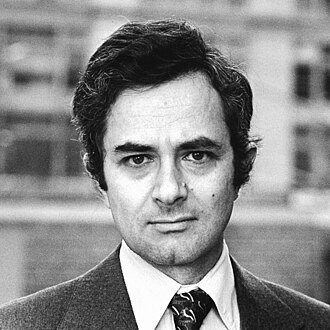
 AuthorThomas Nagelb. 1937
Mind and Cosmos: Why the Materialist Neo-Darwinian Conception of Nature Is Almost Certainly False is a 2012 book by the philosopher Thomas Nagel. In it, Nagel argues that the natural and social sciences cannot account for the existence of human mind and consciousness, so the methods used to investigate this aspect should be revised.
Nagel holds that mind is a basic aspect of nature, and that any philosophy of nature unable to account for it is fundamentally misguided. He considers the standard naturalistic view to clash with common sense. In its place he proposes that the emergence of life and of conscious life may be governed by principles of an entirely different kind, teleological rather than materialist or mechanistic.
Nagel stresses that his argument is not religious, since he is an atheist, nor is it based on intelligent design theory, although he holds that its proponents, such as Michael Behe, Stephen C. Meyer and David Berlinski, do not deserve the scorn with which the great majority of the scientific establishment has met their ideas.
The reception was polarized. Numerous scientists and philosophers, including Steven Pinker, Daniel Dennett and Elliott Sober, criticized it sharply. Some recognized the validity of certain objections raised by Nagel, though they faulted him for not engaging sufficiently with the large body of scientific literature on natural teleology. Others praised his boldness.
Themes
Other works by Thomas Nagel
Original Filopedia text based on Wikipedia (en) and Wikidata.