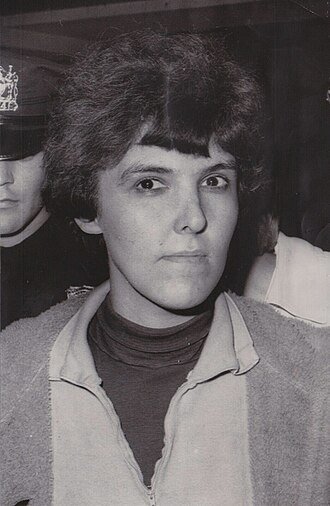
 AuthorValerie Solanas1936–1988
The SCUM Manifesto is a radical feminist pamphlet written by the American author Valerie Solanas between 1966 and 1967. Solanas self-published it in 1967 as mimeographed copies, which she sold herself on the streets of Greenwich Village in New York, charging women one dollar and men two. It belongs to the context of the second wave of American feminism and the countercultural ferment of the period, and it has been read both as satire or parody and as a literal political programme, a tension that has sustained a lasting debate.
The text argues that the male is a kind of incomplete, biologically deficient female, owing to the small size of the Y chromosome. From this supposed deficiency, Solanas claims, follow men's emotional limitation, egocentrism, lack of empathy, and inclination toward violence, economic exploitation and the destruction of the environment. The Manifesto reverses Freud's theory of penis envy and asserts that it is men who envy women's supposed completeness. From this premise it builds a long catalogue of grievances, organised under headings such as war, marriage and prostitution, work, bureaucracy, prejudice and culture, and concludes that the elimination of the male sex is a moral imperative. It proposes that women replace the money-and-work system with complete automation, and that a revolutionary vanguard called SCUM be formed to act through sabotage and direct action. Its final vision is a female utopia without money, disease or death.
The work went largely unnoticed until June 1968, when Solanas shot Andy Warhol and the critic Mario Amaya at Warhol's studio, The Factory. After the attack the press presented her as the author of the text, and Solanas declared that anyone wanting to understand her motives should read the Manifesto. Olympia Press then issued a commercial edition, with a preface by Maurice Girodias and an essay by Paul Krassner, which expanded SCUM as "Society for Cutting Up Men", a formula Solanas rejected and which does not appear in the body of the text. After the publisher's bankruptcy, the rights reverted to the author, who issued a new edition in 1977.
The Manifesto has been reprinted many times and translated into numerous languages, and excerpts appear in feminist anthologies such as Sisterhood Is Powerful. Its influence extends to critiques of wage labour and the nuclear family, to separatist feminist theory, and to popular culture, with references in songs by British bands and in audiovisual works. Readings of it remain divided between those who see an extreme satire of patriarchal discourse and those who take it as a serious political project.
Themes
Original Filopedia text based on Wikipedia (es) and Wikipedia (en) and Wikidata.