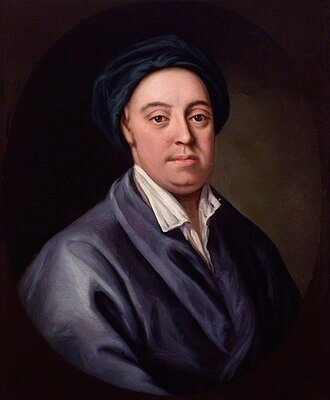
 AuthorJames Thomson1700–1748
The Seasons is a series of four poems by the Scottish writer James Thomson. The first part, on winter, appeared in 1726, and the full cycle was published in 1730. Thomson had studied at Southdean, Jedburgh and Edinburgh University, where he belonged to the literary club The Grotesques. In 1725 he moved to London and, working as tutor to Thomas Hamilton in Barnet, was able to begin Winter, the first of the four poems.
The work appeared one season at a time: Winter in 1726, Summer in 1727, Spring in 1728, and Autumn only in the complete edition of 1730. Thomson took from Milton a vocabulary shaped by Latin and an inverted word order, and extended Milton's narrative blank verse toward description and a meditative tone. The critic Raymond Dexter Havens judged his style pompous and contorted, observing that Thomson seemed to avoid calling things by their right names and speaking simply.
The poem, reflecting on the countryside, was highly influential and much admired for at least a century. Especially lavish editions were produced in Britain and America between 1830 and 1870. A dispute over its publishing rights led to two landmark legal decisions in the history of copyright, Millar v. Taylor and Donaldson v. Beckett. It also inspired paintings, engravings and music, including Haydn's oratorio, based on a libretto by Gottfried van Swieten, and it was cited by Emily Dickinson and, half-sarcastically, by Oscar Wilde.
Themes
Original Filopedia text based on Wikipedia (en) and Wikidata.