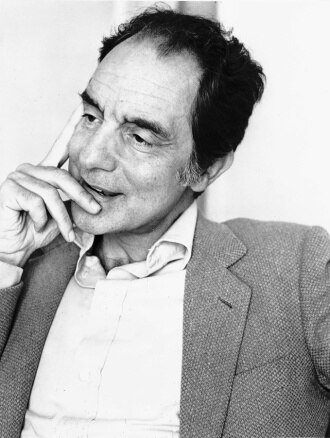
 AuthorItalo Calvino1923–1985
Invisible Cities is a postmodern novel by the Italian writer Italo Calvino, published in Italy in 1972 by Einaudi. It is one of the best-known works of twentieth-century experimental literature. Its premise is an imagined journey: Marco Polo describes to Kublai Khan, emperor of the Mongols, the cities he has visited across the empire. The book presents some fifty-five of these cities in brief, often fantastical prose poems that touch on desire, memory, death, signs and human experience in general.
The work draws on the tradition of travel literature and, in particular, on the account of the Venetian merchant Marco Polo, who in the thirteenth century described his journeys through Asia and the Mongol Empire. Calvino takes from that model the form of descriptions of distant places, but empties them of verifiable references in order to turn them into a meditation on language and on how we name and understand the world. The book is organized into nine chapters. Between the descriptions, dialogues between Polo and the Khan discuss what it means to describe a place and the relationship between words and things. In one of them the Khan asks about Venice, Polo's hometown, which has never been mentioned; Polo replies that every time he describes a city he is in fact saying something about Venice.
The structure is deliberately rigorous. The cities are grouped into eleven themes of five entries each, arranged in a symmetrical mathematical pattern. Calvino, close to the Oulipo group, conceived the book so that readers can move through it by following different combinations of themes rather than in a single linear order. In a 1983 conference the author stated that the work has no definite ending, since it was conceived as a polyhedron with conclusions written along all its edges.
The novel was warmly received and its influence extends across fiction, poetry and thinking about the city. It was nominated for the Nebula Award for Best Novel in 1975. It later inspired an opera by the composer Christopher Cerrone, first staged in 2013 in a railway station in Los Angeles, whose recording was a finalist for the 2014 Pulitzer Prize for Music.
Themes
Other works by Italo Calvino
Original Filopedia text based on Wikipedia (es) and Wikipedia (en) and Wikidata.