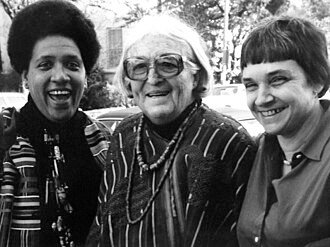
 AuthorAdrienne Rich1929–2012
The Dream of a Common Language is a poetry collection by Adrienne Rich, published in 1978. It was the first book Rich issued after she came out as a lesbian in 1976, and in it her personal life is woven together with her social and political convictions. The award-winning poet and activist proposes the idea of a common language that could be reached through poetry, art and feminist ideas.
The book is divided into three sections. The first, "Power", contains eight poems about the notable achievements of individual women, which Rich connects to the experience of all women. The title poem recalls Marie Curie's discovery of polonium and radium, a finding that gave her power and that eventually cost her her life. These poems call for a redefinition of power so that it includes women without destroying them, and point to the ideological change this would require. The second section, "Twenty-One Love Poems", is a group of lesbian love poems that affirms the strength of that bond and criticises a culture that fails to recognise it as love. The poems describe the isolation of those in such relationships, which in the end break down under social and cultural pressures. The third section, "Not Somewhere Else, But Here", returns to female relationships, now set in dialogue with nature, and celebrates women's capacity to create on a large scale from everyday materials.
Critics read the work as a personal process of lesbian self-affirmation, but also as a message to other women to accept their identities and to live beyond the molds that dominant masculine norms imposed on them. Rich, though not a naive optimist, wrote with the conviction that joy could also be found along that path.
Themes
Other works by Adrienne Rich
Original Filopedia text based on Wikipedia (en) and Wikidata.