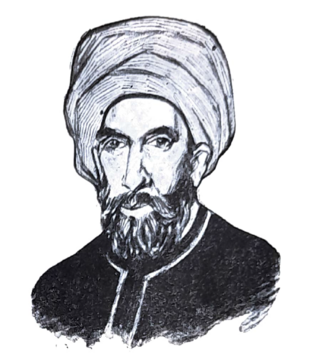
 AuthorIbn Tufayl1110–1185
Ḥayy ibn Yaqẓān, usually known in English as The Self-Taught Philosopher, is an Arabic philosophical novel written by Ibn Tufail (c. 1110–1185), an Andalusian philosopher and physician who lived under the Almohad dynasty and served the sultan Abu Yaqub Yusuf. It is usually dated to the early twelfth century in al-Andalus. It is regarded as the first philosophical novel in Arabic and one of the most original products of the classical Islamic intellectual tradition. Its title borrows from an earlier allegorical tale of the same name written by Avicenna, although the two stories differ greatly: where Avicenna's was an intellectual experiment on the active intellect, Ibn Tufail's follows the development of a human mind in isolation.
The story follows Ḥayy, a boy raised on a desert island in the Indian Ocean by a gazelle that nurses him. Without contact with other people, he learns to imitate the calls of animals, makes his clothing from skins, studies the stars and, after his foster mother dies, dissects her to understand what happened. Through systematic reasoning and observation he arrives at knowledge of nature and the idea of a creator of the universe. Later he meets another human being, Absal, and through him encounters religion and civilization. Ḥayy concludes that religious symbols and social conventions are necessary for the majority to live decently, though he regards them as veils that distract from the truth.
The work seeks to reconcile philosophy with revealed religion, a central concern of Islamic and later Christian thought. It addresses questions of epistemology and proposes that a human being can reach essential knowledge by his own powers, and that reason and faith need not contradict each other. Ibn Tufail wrote it as a response to and continuation of Avicenna, and his engagement with al-Ghazali and Sufi tradition is evident throughout.
Its reception was wide. After its Latin translation in 1671 by Edward Pococke the Younger, as Philosophus autodidactus, it became a bestseller in Europe during the seventeenth and eighteenth centuries. It influenced thinkers such as Locke, Hume, Berkeley, Leibniz, Newton and Kant, and its image of a mind formed from nothing is often linked to the idea of tabula rasa. It is also connected with Daniel Defoe's Robinson Crusoe and with other stories of children raised outside society. In the Muslim world it has long been read as an important Sufi text.
Themes
Original Filopedia text based on Wikipedia (es) and Wikipedia (en) and Wikidata.