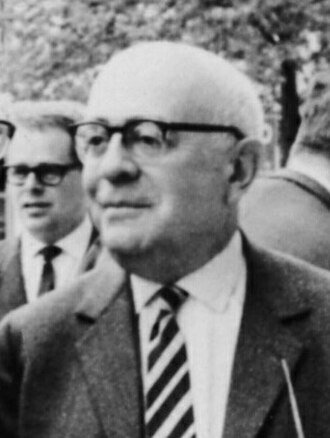
 AuthorTheodor W. Adorno1903–1969
Negative Dialectics is a book published in 1966 by the German philosopher Theodor W. Adorno. In it he critiques traditional Western philosophy and, above all, the dialectical thinking that runs from Hegel to Marxist dialectical materialism. Adorno argues that the Enlightenment's emphasis on reason and progress has led to the domination of nature and the suppression of human individuality.
Against Hegel's dialectic, in which contradictions are overcome in a higher synthesis, Adorno proposes a dialectic that rejects any final reconciliation. His central claim is that one must maintain the tension between opposing elements and resist subsuming the particular under abstract, totalizing concepts. Hence the title: a dialectic that produces nothing positive as its outcome, but reveals the limits of knowledge and the non-identity of objects. Adorno notes that the figure of the 'negation of the negation', already present in Plato, became a succinct term, and his book seeks to free dialectics from such affirmative traits without losing its rigor.
The work is grounded in Adorno's reflection on Auschwitz and the systematic extermination of the Jews, which he regards as a break that calls into question the foundations of Western philosophical thought. For him, the experience of the camps demands a new critical theory capable of confronting the ethical and metaphysical challenges the Holocaust poses. From this conviction comes his well-known formulation of a new categorical imperative: to arrange thought and action so that Auschwitz will not happen again.
The book has had considerable influence on cultural criticism, especially through the analysis of popular culture and the culture industry that Adorno developed in other texts. His conception of dialectics has inspired thinkers such as Joel Kovel, John Holloway, John Zerzan and Boike Rehbein. It has also shaped Holocaust historians such as Zygmunt Bauman, Yehuda Bauer and Saul Friedländer. The book further suggests that the taboo against precisely explaining why the Holocaust occurred reflects the limits of knowledge when faced with the subjective experience of the camps, summed up in the phrase "Here there is no why", spoken by a guard at Auschwitz.
Themes
Other works by Theodor W. Adorno
- The Authoritarian Personality 1950
- Minima Moralia 1951
- Aesthetic Theory 1970
Original Filopedia text based on Wikipedia (es) and Wikipedia (en) and Wikidata.