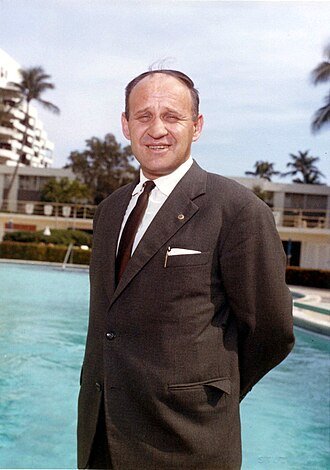
 AuthorVäinö Linna1920–1992
Under the North Star (in Finnish, Täällä Pohjantähden alla) is a trilogy by the Finnish writer Väinö Linna, published between 1959 and 1962. Linna, a former soldier who had fought in the Continuation War (1941–1944), conceived it as a broad chronicle of everyday life in a Finnish village. The story follows a farming family from about 1880 to about 1950, moving through the First World War, the Finnish Civil War and the Second World War.
The first volume opens with Jussi, a farm hand from Häme who clears a marsh to create a small holding, which will later be known as Koskela. From there the novel traces the tensions between crofters and landowners in the village of Pentinkulma, the language conflict between Finnish and Swedish speakers, and the country's relationship with Russia. Jussi's son Akseli becomes an active socialist. The second volume deals with the civil war of 1918, with the atrocities committed on both sides, and the third with the postwar years under the victorious Whites, along with further wars that strike the family again.
The trilogy had a considerable impact in Finland. Its opening sentence, which echoes the beginning of Genesis and the Gospel of John, is familiar even to many who have never read the book. The second volume caused controversy for portraying the Reds with human sympathy, something new in a historiography that until then had been written from the winning side, and it helped open a public debate about what had happened in 1918. It was adapted into films several times.
Themes
Other works by Väinö Linna
- The Unknown Soldier 1954
Original Filopedia text based on Wikipedia (es) and Wikipedia (en) and Wikidata.