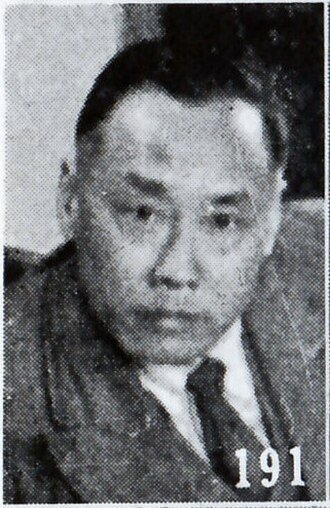
Carsun Chang
1886–1969 · Chinese social-democratic philosopher and politician of the New Confucian current
Zhang Junmai (1886-1969), known in the West as Carsun Chang, was a Chinese philosopher and politician who sought to join democratic socialism with the Confucian tradition. His life spanned the late imperial period, the Republic and the postwar years, and his work shows how Chinese intellectuals debated modernization without abandoning their own culture.
A follower of Liang Qichao, he studied in Japan, then in Berlin and at the University of Jena, where he absorbed the ideas of Rudolf Eucken and Henri Bergson. Back in China, his 1923 lecture at Tsinghua University on the outlook on life sparked the debate over science and metaphysics. He helped found a socialist party and co-organized the China Democratic League. After 1949 he settled in the United States, opposed both to the Chinese communists and to the authoritarianism of the Kuomintang.
His thought combined German-style mixed economy and social ownership of major means of production with a reading of Confucianism as a source of values compatible with democracy. He held the Datong chapter of the Book of Rites as a model of an egalitarian society. His influence endures mainly in the New Confucian movement, to which he contributed the 1958 manifesto, and in the drafting of the constitution of the Republic of China.
Key ideas
- Democratic socialism: social ownership of land and major means of production, with mixed management by producers, consumers and the state.
- Neo-Confucianism: reading Confucian values in a progressive light rather than as conservatism.
- Statism: the nation-state must consolidate itself before pursuing universal harmony.
- Limits of science: science alone cannot determine the norms of a just life.
Curiosities
A tour with Tagore
In 1924 he co-hosted, with Liang Qichao, the Chinese tour of the Indian poet Rabindranath Tagore. Protests against Tagore's perceived orientalism forced the tour to end early.
An influential family
His brother Chang Kia-ngau was a prominent banker and politician, and his sister Zhang Youyi was an educator and banker, as well as the first wife of the poet Xu Zhimo.
Original Filopedia text based on Wikipedia (es) and Wikipedia (en) and Wikidata.